ChipApex | Global Electronic Components Supplier
SEARCH
Search Product
Search Post
— IC芯片 | 连接器 | 传感器 | 被动器件 —
Search productSearch post
— IC芯片 | 连接器 | 传感器 | 被动器件 —
Consult the customer manager about the wholesale price.
consultation hotline:86-132-6715-2157
email:[email protected]
Contact the product manager for consultation. One-stop consultation is available.
Do you want a lower wholesale price? Please send us your inquiry and we will reply immediately.
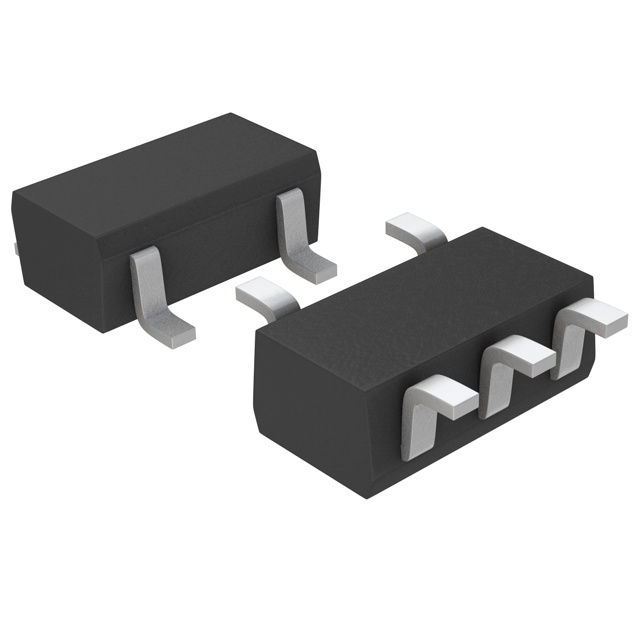
The FMY5T148 is a dual bipolar junction transistor array manufactured by ROHM Semiconductor, housed in an SMT-5 surface-mount package. It integrates one NPN and one PNP transistor configured in an emitter-coupled arrangement. The device supports a maximum collector-emitter voltage of 120 V and a continuous collector current of 50 mA. Key electrical characteristics include a transition frequency of 140 MHz and a power dissipation rating of 300 mW. The component operates within a temperature range of -55°C to +150°C, providing reliable performance for high-voltage switching applications requiring compact integration.
Verify the specific suffix T148 against the official ROHM datasheet to confirm pinout compatibility and electrical tolerances. Ensure the procurement channel provides original manufacturer documentation to validate RoHS compliance and lead-free status. Cross-reference the SMT-5 package dimensions with your PCB footprint library to prevent assembly errors during surface mount placement.
Select this component when designing circuits requiring matched NPN/PNP pairs with high voltage tolerance. The 120 V rating distinguishes it from standard 50 V digital transistors. Consider the 140 MHz bandwidth for signal integrity requirements. The emitter-coupled topology simplifies biasing networks compared to discrete component solutions, reducing overall bill-of-materials complexity.
This part belongs to the ROHM Bipolar Transistor Array family, specifically designed for general-purpose applications. It falls under the broader category of pre-biased or integrated transistor solutions that replace multiple discrete components. The FMY5 series offers a balance of voltage handling and speed suitable for consumer electronics and industrial control systems.
Direct substitutes may include other ROHM dual arrays with similar 120 V ratings and SMT-5 packaging. Verify pin-to-pin compatibility before substitution. Alternative manufacturers may offer comparable NPN/PNP pairs, but electrical parameters such as hFE and fT must be validated against the original design specifications.
 FMY5T148
The activity of extra discounts on wholesale prices is in full swing…
Please fill in your contact information and we will send you the latest wholesale price list.