ChipApex | Global Electronic Components Supplier
SEARCH
Search Product
Search Post
— IC芯片 | 连接器 | 传感器 | 被动器件 —
Search productSearch post
— IC芯片 | 连接器 | 传感器 | 被动器件 —
Consult the customer manager about the wholesale price.
consultation hotline:86-132-6715-2157
email:[email protected]
Contact the product manager for consultation. One-stop consultation is available.
Do you want a lower wholesale price? Please send us your inquiry and we will reply immediately.
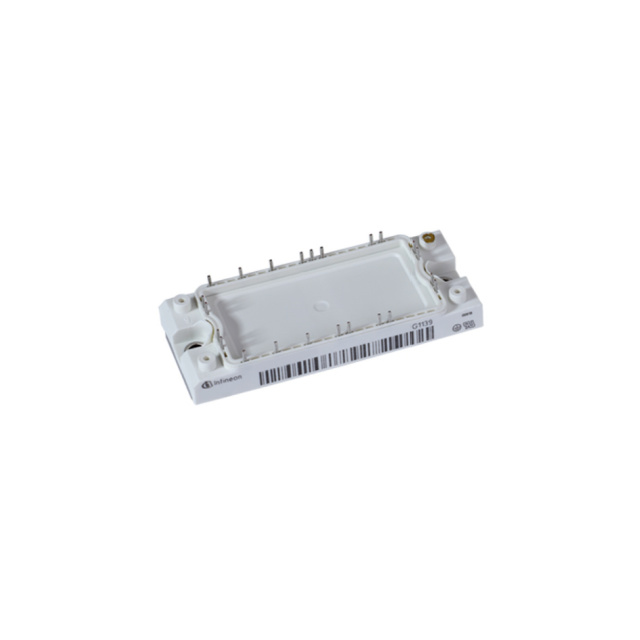
The FP75R12N2T4B11BPSA1 is a silicon IGBT module from Infineon Technologies, belonging to the EconoPIM™ 2 series. It features a three-phase input rectifier configuration with a maximum collector-emitter voltage of 1200 V and a continuous collector current of 75 A at 25°C. The device utilizes Trenchstop™ technology for optimized switching performance. It is housed in a tray package with a factory pack quantity of 10 units. The module operates within a temperature range of -40°C to +150°C and complies with RoHS standards.
Verify the specific suffix B11 against official datasheets to confirm pinout and electrical characteristics match the design requirements. Check manufacturer status as distribution channels may list discontinued or end-of-life inventory. Confirm RoHS compliance documentation is available for regulatory adherence. Ensure handling procedures account for the tray packaging format during assembly.
Select this component when a 1200 V rating and 75 A current capacity are required for three-phase rectification applications. Compare saturation voltage and switching losses against alternative Trenchstop generations if lower conduction losses are critical. Evaluate the EconoPIM™ 2 footprint compatibility with existing PCB layouts and cooling solutions before finalizing the design choice.
This part belongs to the broader FP75R12 family of Infineon IGBT modules. Variants such as FP75R12N2T4PBPSA1 differ primarily in internal diode configurations or packaging revisions. The N2 designation typically indicates specific trench generation characteristics within the 1200 V class. Cross-referencing the full datasheet is necessary to distinguish between similar model numbers in the same current and voltage bracket.
Direct substitutes include other Infineon EconoPIM™ 2 modules with identical 1200 V and 75 A ratings. Verify pin-to-pin compatibility with variants like FP75R12N2T4PBPSA1 if the rectifier configuration matches. Alternative technologies require re-evaluation of gate drive requirements and thermal management strategies due to differing switching speeds.
 FP75R12N2T4B11BPSA1
The activity of extra discounts on wholesale prices is in full swing…
Please fill in your contact information and we will send you the latest wholesale price list.