 ChipApex | Global Electronic Components Supplier
SEARCH
Search Product
Search Post
— IC芯片 | 连接器 | 传感器 | 被动器件 —
Search productSearch post
— IC芯片 | 连接器 | 传感器 | 被动器件 —
Consult the customer manager about the wholesale price.
consultation hotline:86-132-6715-2157
email:[email protected]
Contact the product manager for consultation. One-stop consultation is available.
Do you want a lower wholesale price? Please send us your inquiry and we will reply immediately.
The HFA3128BZ is an ultra-high frequency transistor array manufactured by Renesas Electronics Corporation. It consists of five dielectrically isolated PNP bipolar transistors on a common monolithic substrate, fabricated using the complementary bipolar UHF-1 process. The device operates at a transition frequency (fT) of 5.5 GHz with a typical noise figure of 3.5 dB. Key electrical parameters include a maximum collector-emitter voltage (VCEO) of 8 V, a maximum emitter-base voltage (VEBO) of 5.5 V, and a continuous collector current of 65 mA. The power dissipation is rated at 150 mW, and it functions within a temperature range of -55°C to +125°C. It is housed in a 16-lead QFN EP package.
Verify component authenticity through authorized channels due to end-of-life status. Confirm RoHS compliance details as specified in official documentation. Check moisture sensitivity level requirements before handling. Validate package dimensions against PCB footprint specifications. Ensure supply chain stability given discontinued manufacturing status.
Select this component for designs requiring matched PNP arrays at 5.5 GHz. Compare against NPN variants like HFA3127 if polarity differs. Consider thermal management for 150 mW dissipation in compact QFN packages. Verify compatibility with existing RF layouts. Evaluate alternative packages if lead-free constraints apply.
The HFA3128 series belongs to Renesas' family of ultra-high frequency transistor arrays, including HFA3046, HFA3096, and HFA3127. These devices utilize the same UHF-1 process technology. The HFA3128 specifically features all PNP transistors, contrasting with the NPN-only HFA3127 or the mixed NPN-PNP HFA3096. This family is designed for high-frequency analog applications requiring precise matching.
Public confirmed substitute part numbers are not available. The HFA3128BZ is listed as obsolete. Designers should consult manufacturer recommendations for next-generation replacements or evaluate equivalent arrays from other vendors if pin-compatible alternatives exist.
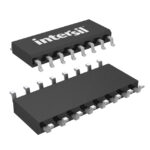 HFA3128BZ
The activity of extra discounts on wholesale prices is in full swing…
Please fill in your contact information and we will send you the latest wholesale price list.







