 ChipApex | Global Electronic Components Supplier
SEARCH
Search Product
Search Post
— IC芯片 | 连接器 | 传感器 | 被动器件 —
Search productSearch post
— IC芯片 | 连接器 | 传感器 | 被动器件 —
Consult the customer manager about the wholesale price.
consultation hotline:86-132-6715-2157
email:[email protected]
Contact the product manager for consultation. One-stop consultation is available.
Do you want a lower wholesale price? Please send us your inquiry and we will reply immediately.
The HVC202BTRU-E is a dual-channel high-voltage bus transceiver designed for robust communication in electric vehicle (EV) and industrial environments. It supports the CAN FD protocol with data rates up to 5 Mbps, ensuring reliable high-speed data transmission. The device operates from a single 3.3V supply voltage and features integrated ESD protection rated at ±15kV (HBM) on all pins. It includes fail-safe circuitry to maintain a recessive state during fault conditions, such as open or shorted bus lines. The component is housed in an 8-pin TSSOP package, suitable for space-constrained PCB layouts.
Verify the specific suffix 'TRU-E' against the manufacturer's official datasheet to confirm tape-and-reel packaging and lead-free compliance. Ensure the operating temperature range matches the application requirements, typically -40°C to +125°C for automotive grades. Cross-reference the pinout diagram with the target PCB design to prevent interface mismatches.
Select this component when CAN FD support is required alongside high ESD immunity in automotive or industrial settings. Compare performance metrics such as propagation delay and quiescent current against alternative transceivers if power efficiency is critical. Confirm that the 3.3V logic level compatibility aligns with the connected microcontroller or host processor.
This part belongs to Renesas Electronics' family of high-voltage bus transceivers, specifically engineered for demanding environments. It complements other CAN/CAN FD controllers by providing the physical layer interface. The series is designed to meet stringent automotive standards, offering durability against electrical stress and electromagnetic interference common in vehicle architectures.
Check for direct pin-to-pin compatible alternatives from manufacturers like NXP or Texas Instruments that offer similar CAN FD capabilities and ESD ratings. Verify that any substitute maintains the same 3.3V supply requirement and package dimensions to ensure mechanical fit without redesigning the PCB footprint.
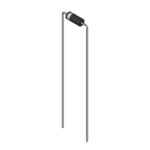 HVC202BTRU-E
The activity of extra discounts on wholesale prices is in full swing…
Please fill in your contact information and we will send you the latest wholesale price list.






