ChipApex | Global Electronic Components Supplier
SEARCH
Search Product
Search Post
— IC芯片 | 连接器 | 传感器 | 被动器件 —
Search productSearch post
— IC芯片 | 连接器 | 传感器 | 被动器件 —
Consult the customer manager about the wholesale price.
consultation hotline:86-132-6715-2157
email:[email protected]
Contact the product manager for consultation. One-stop consultation is available.
Do you want a lower wholesale price? Please send us your inquiry and we will reply immediately.
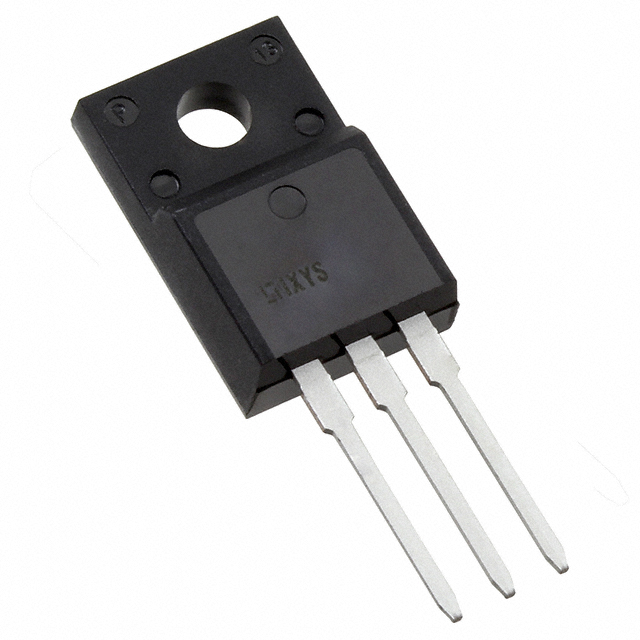
The IXYS IXYP10N65C3D1M is a single N-channel silicon Insulated Gate Bipolar Transistor (IGBT) utilizing XPT-GenX3 technology. It features a maximum collector-emitter voltage of 650 V and a continuous collector current of 15 A at 25°C, with a peak pulsed current rating of 50 A. The device exhibits a typical collector-emitter saturation voltage of 2.27 V and operates within a junction temperature range of -55°C to +175°C. Packaged in a TO-220AB/FP (TO-220-3) through-hole configuration, it dissipates up to 53 W of power. The gate-emitter voltage limits are specified at ±20 V, with a leakage current of 100 nA.
Verify the specific suffix 'M' against the manufacturer datasheet to confirm packaging or tape-and-reel specifications, as standard variants may differ. Cross-reference the IXYS part number with authorized distributor catalogs to ensure component authenticity and traceability. Confirm RoHS compliance status via official documentation before integration into regulated assemblies.
Select this component for circuits requiring 650 V blocking capability with moderate current handling around 15 A continuous. The TO-220AB/FP package facilitates straightforward thermal management via heatsink mounting. Ensure gate drive voltages remain within the ±20 V limit to prevent dielectric breakdown while maintaining low saturation voltage for efficiency.
This IGBT belongs to the IXYS C3-class series, characterized by fast recovery anti-parallel diodes integrated within the module structure. The XPT-GenX3 generation represents an evolution in field-stop IGBT designs, offering improved short-circuit ruggedness compared to earlier non-field-stop architectures. It serves as a discrete alternative to larger modules in medium-power industrial applications.
Direct pin-compatible substitutes include other IXYS 650V IGBTs in TO-220 packages such as the IXYP10N65C3D1. Verify that replacement devices match the required Vceo, Ic, and Vce(sat) parameters to maintain circuit performance integrity without redesigning the thermal interface.
 IXYP10N65C3D1M
The activity of extra discounts on wholesale prices is in full swing…
Please fill in your contact information and we will send you the latest wholesale price list.