ChipApex | Global Electronic Components Supplier
SEARCH
Search Product
Search Post
— IC芯片 | 连接器 | 传感器 | 被动器件 —
Search productSearch post
— IC芯片 | 连接器 | 传感器 | 被动器件 —
Consult the customer manager about the wholesale price.
consultation hotline:86-132-6715-2157
email:[email protected]
Contact the product manager for consultation. One-stop consultation is available.
Do you want a lower wholesale price? Please send us your inquiry and we will reply immediately.
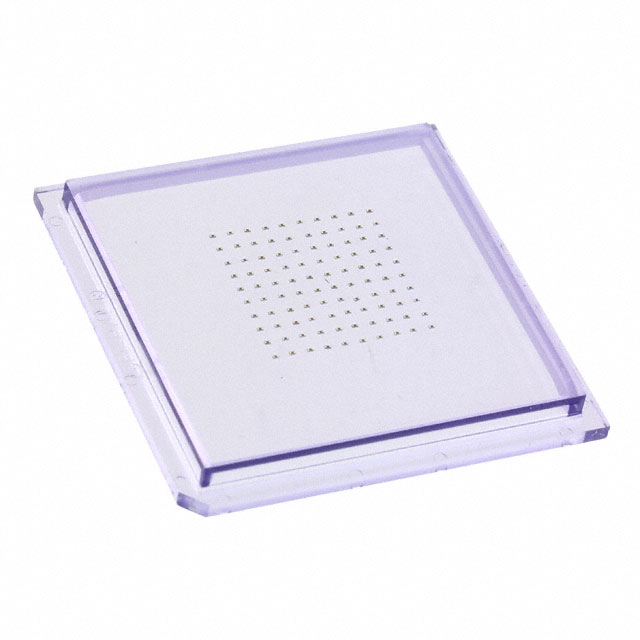
The MA46H120 is a gallium arsenide flip-chip hyperabrupt varactor diode designed for high device uniformity and extremely low parasitics. Fabricated on OMCVD epitaxial wafers, the component features silicon nitride passivation and polyimide scratch protection to prevent junction damage during handling. It operates within a temperature range of -40°C to +125°C with a maximum power dissipation of 100 mW. Electrical specifications include a minimum breakdown voltage of 20 V at 10 µA reverse current and a maximum reverse leakage current of 100 nA at 14 V. The device maintains a constant gamma of 1.00 ±10% from 2 to 12 volts.
Verify the specific package variant required for production, as the series includes Gel Pack (MA46H120), Waffle Pack (MAVR-000120-12030W), and Whole Wafer options. Confirm that the operating environment remains within the specified -40°C to +125°C range to ensure reliability. Ensure mounting temperatures do not exceed +235°C for more than 10 seconds during soldering processes to avoid permanent damage to the device structure.
Select this component when linear tuning performance is critical due to its constant gamma specification across the 2 to 12 volt range. The flip-chip format is suitable for designs prioritizing low parasitic inductance and capacitance. Consider the robust protective coatings if the manufacturing process involves manual handling or requires high resistance to physical abrasion during assembly.
This part belongs to the MA46H120 Series of gallium arsenide varactor diodes manufactured by M/A-COM Technology Solutions. The series utilizes OMCVD epitaxial wafers to achieve high uniformity. It is distinct from standard planar varactors by its flip-chip architecture and specialized protective layers, targeting applications demanding precise capacitance control and durability in RF environments.
The SCP-5760 and SCP-5761 from Sensitron are listed as similar parts offering GaAs constant gamma hyperabrupt varactor functionality. Verify pin compatibility and electrical tolerances before substitution.
 MA46H120
The activity of extra discounts on wholesale prices is in full swing…
Please fill in your contact information and we will send you the latest wholesale price list.