ChipApex | Global Electronic Components Supplier
SEARCH
Search Product
Search Post
— IC芯片 | 连接器 | 传感器 | 被动器件 —
Search productSearch post
— IC芯片 | 连接器 | 传感器 | 被动器件 —
Consult the customer manager about the wholesale price.
consultation hotline:86-132-6715-2157
email:[email protected]
Contact the product manager for consultation. One-stop consultation is available.
Do you want a lower wholesale price? Please send us your inquiry and we will reply immediately.
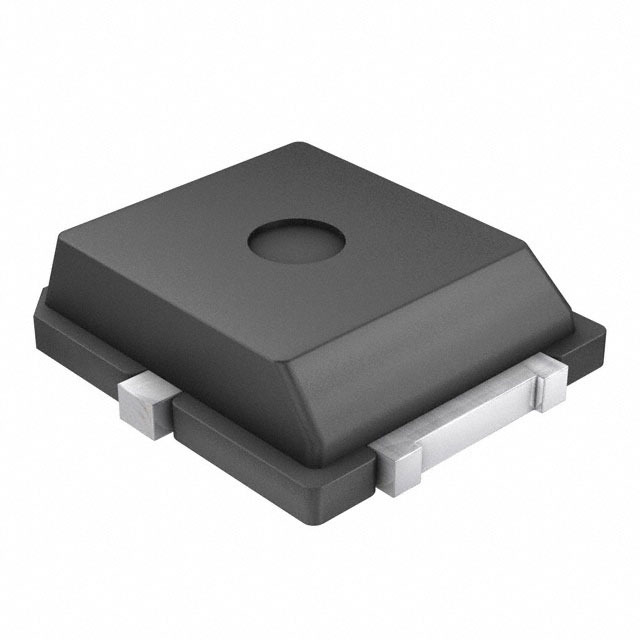
The MHT1006NT1 is an RF power LDMOS transistor manufactured by NXP USA Inc., designed for industrial heating applications within the 728 MHz to 2700 MHz frequency range. It operates at a supply voltage of 28 V and delivers 10 W of continuous wave (CW) output power. The device supports both CW and pulse operation modes, ensuring versatility in high-frequency signal generation. Packaged in a PLD-1.5W housing, this component integrates robust performance characteristics suitable for demanding RF environments requiring stable power delivery across wide bandwidths.
Verify the specific datasheet version to confirm electrical parameters such as gain and efficiency, as these may vary slightly between production batches. Ensure the PLD-1.5W package compatibility with your thermal management solution. Cross-reference the part number MHT1006NT1 with official NXP documentation to distinguish it from similar models like MHT1003NR3 or MMG3006NT1, which have different voltage ratings and frequencies. Confirm RoHS compliance status if required for your assembly process.
Select the MHT1006NT1 when a 28 V supply voltage and 10 W output power are required for frequencies up to 2700 MHz. Consider its suitability for both CW and pulse modes if your application involves intermittent high-power bursts. Evaluate the PLD-1.5W package size against your PCB layout constraints. Compare it against lower voltage alternatives like the MMG3006NT1 if your system operates at 5 V, noting that the MHT1006NT1 is optimized for higher power industrial use rather than low-voltage mobile communications.
This component belongs to NXP's portfolio of RF power LDMOS transistors, specifically engineered for robustness in industrial settings. Unlike the MMG3006NT1, which is a 5 V amplifier cell for mobile communications, the MHT1006NT1 targets higher power density needs. Its design focuses on reliability in harsh electromagnetic environments, distinguishing it from general-purpose RF FETs used in consumer electronics.
Public confirmed substitute part numbers are not available in the provided documentation. Users should consult NXP directly for qualified replacements.
 MHT1006NT1
The activity of extra discounts on wholesale prices is in full swing…
Please fill in your contact information and we will send you the latest wholesale price list.