ChipApex | Global Electronic Components Supplier
SEARCH
Search Product
Search Post
— IC芯片 | 连接器 | 传感器 | 被动器件 —
Search productSearch post
— IC芯片 | 连接器 | 传感器 | 被动器件 —
Consult the customer manager about the wholesale price.
consultation hotline:86-132-6715-2157
email:[email protected]
Contact the product manager for consultation. One-stop consultation is available.
Do you want a lower wholesale price? Please send us your inquiry and we will reply immediately.
The MMRF1015GNR1 is an RF power transistor manufactured by NXP USA Inc. It is classified as a discrete semiconductor device within the transistor category. The component is designed for general-purpose applications and operates with an NPN polarity/channel type. Key electrical parameters include a maximum collector current (IC) of 1 A, a minimum DC current gain (hFE) of 10, and a maximum power dissipation (Abs) of 17.5 W. The device supports a highest operating temperature of 150 °C. It is configured as a single element and does not utilize surface mount packaging.
Verify the specific datasheet revision and package details before procurement. Confirm that the non-surface mount form factor aligns with your PCB design requirements. Ensure thermal management solutions are adequate for the 17.5 W dissipation rating at the intended operating temperature. Check for any specific handling instructions related to the plastic package construction.
Select this component when a robust NPN transistor with moderate current capabilities is required. The 1 A collector current and 17.5 W power dissipation make it suitable for applications needing reliable performance without excessive size. Consider the non-surface mount constraint during mechanical design. Verify compatibility with the target frequency range and biasing conditions specified in the official documentation.
This part belongs to the broader family of RF power transistors offered by NXP. It shares design philosophies with other devices in the portfolio, focusing on ruggedness and ease of use. The MMRF1015GNR1 specifically targets applications requiring stable operation under varying load conditions. Its classification as a discrete semiconductor highlights its role as a fundamental building block in larger electronic systems.
Consult official substitution guides for verified alternatives. Ensure any replacement matches the NPN configuration, 1 A current rating, and 17.5 W power dissipation. Verify pinout compatibility and package dimensions to avoid mechanical integration issues. Cross-reference electrical characteristics to maintain system performance integrity.
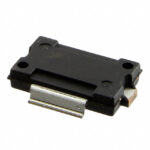 MMRF1015GNR1
The activity of extra discounts on wholesale prices is in full swing…
Please fill in your contact information and we will send you the latest wholesale price list.