 ChipApex | Global Electronic Components Supplier
SEARCH
Search Product
Search Post
— IC芯片 | 连接器 | 传感器 | 被动器件 —
Search productSearch post
— IC芯片 | 连接器 | 传感器 | 被动器件 —
Consult the customer manager about the wholesale price.
consultation hotline:86-132-6715-2157
email:[email protected]
Contact the product manager for consultation. One-stop consultation is available.
Do you want a lower wholesale price? Please send us your inquiry and we will reply immediately.
The NE66219-T1-A is an NPN silicon RF bipolar transistor manufactured by CEL, designed for low noise and high-gain amplification applications. It utilizes a 25 GHz fT technology suitable for high-frequency oscillation circuits. The device is housed in a 3-pin Ultra Super Minimold (19, 1608) surface-mount package. Key electrical specifications include a maximum collector-emitter voltage (VCEO) of 3.3 V, an emitter-base voltage (VEBO) of 1.5 V, and a continuous collector current rating of 35 mA. The component supports a power dissipation of 115 mW and offers a minimum DC collector/base gain (hFE) of 50.
Verify the specific manufacturer source, as this part number has been associated with multiple vendors including NEC and Renesas historically. Confirm that the delivered unit matches the CEL specification sheet regarding the 1608 package dimensions and electrical limits. Ensure compliance with RoHS requirements if mandated by the design. Cross-reference the datasheet revision to confirm parameter consistency before finalizing procurement orders.
Select this component when designing circuits requiring an NPN silicon transistor with a 25 GHz fT capability in a compact SMD form factor. The 3.3 V VCEO limit dictates the biasing conditions for low-voltage RF applications. Consider the 115 mW power dissipation rating for thermal management within the small outline package. Verify that the required gain and noise figure align with the standard specifications provided in the official data sheet.
This transistor belongs to the NE662 series of RF bipolar devices from CEL. It shares functional similarities with other members like the NE662M16-A but is distinguished by its specific packaging and intended use in low-noise, high-frequency environments. The series represents silicon-based solutions for microwave and millimeter-wave applications where size and performance are critical constraints.
The NE662M16-A is a related part within the same product family. Verify pinout compatibility and exact electrical parameters against the target application requirements before substitution. Other equivalents may exist under different manufacturer naming conventions, such as those from NEC or Renesas, requiring careful datasheet comparison.
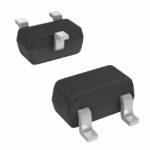 NE66219-T1-A
The activity of extra discounts on wholesale prices is in full swing…
Please fill in your contact information and we will send you the latest wholesale price list.





