ChipApex | Global Electronic Components Supplier
SEARCH
Search Product
Search Post
— IC芯片 | 连接器 | 传感器 | 被动器件 —
Search productSearch post
— IC芯片 | 连接器 | 传感器 | 被动器件 —
Consult the customer manager about the wholesale price.
consultation hotline:86-132-6715-2157
email:[email protected]
Contact the product manager for consultation. One-stop consultation is available.
Do you want a lower wholesale price? Please send us your inquiry and we will reply immediately.
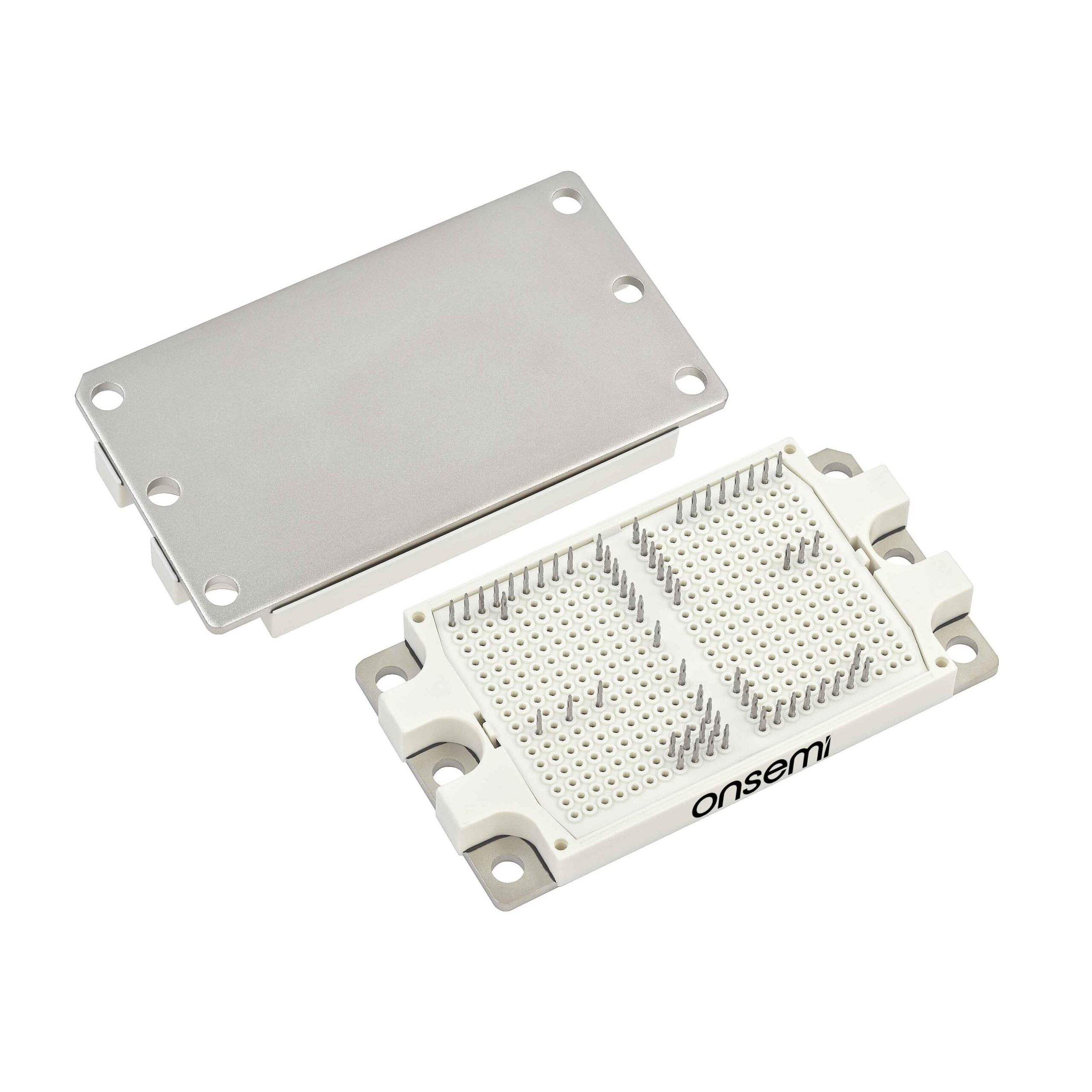
The NXH800H120L7QDSG is a half-bridge IGBT power module rated at 1200 V and 800 A. It integrates Field Stop Trench 7 IGBTs and Gen. 7 diodes to minimize conduction and switching losses. The device features an isolated base plate, solderable pins, and low inductive layout for superior reliability. Electrical characteristics include a collector-emitter saturation voltage of 1.65 V to 2.05 V at 800 A and 25°C. Thermal resistance from junction to case is 0.0498 °C/W per IGBT and 0.0889 °C/W per diode. The module operates within a junction temperature range of -40°C to 175°C.
Verify the specific ordering suffix against official documentation to ensure correct assembly site and testing configuration. Confirm that the PIM11 package dimensions align with the mechanical constraints of the target application. Ensure compliance with RoHS standards as indicated by the Pb-Free designation. Validate thermal interface material requirements based on the specified thermal resistance values.
Select this component when high current capacity and low switching losses are critical for system efficiency. The 1200 V rating supports standard DC bus voltages in industrial applications. Consider the 800 A continuous current capability for sizing cooling solutions appropriately. Evaluate the short circuit withstand time and operating temperature range against the expected environmental conditions of the deployment site.
This module belongs to the Qdual3 series, utilizing advanced semiconductor technologies to improve power density. It represents a significant advancement over previous generations by reducing energy losses significantly. The design focuses on simplifying system architecture while maintaining robust performance under demanding electrical loads.
Direct substitutes require matching the 1200 V/800 A ratings and PIM11 footprint. Verify pin compatibility and thermal resistance specifications before integration. Cross-referencing with other Qdual3 variants may offer alternative configurations but requires careful validation of electrical parameters.
 NXH800H120L7QDSG
The activity of extra discounts on wholesale prices is in full swing…
Please fill in your contact information and we will send you the latest wholesale price list.