 ChipApex | Global Electronic Components Supplier
SEARCH
Search Product
Search Post
— IC芯片 | 连接器 | 传感器 | 被动器件 —
Search productSearch post
— IC芯片 | 连接器 | 传感器 | 被动器件 —
Consult the customer manager about the wholesale price.
consultation hotline:86-132-6715-2157
email:[email protected]
Contact the product manager for consultation. One-stop consultation is available.
Do you want a lower wholesale price? Please send us your inquiry and we will reply immediately.
The PN4392 is an N-channel Junction Field-Effect Transistor (JFET) manufactured by Central Semiconductor Corp. It utilizes silicon technology and is housed in a TO-92-3 through-hole package. Key electrical parameters include a maximum drain-gate voltage of 40 V, a gate-source breakdown voltage of 40 V, and a gate-source cutoff voltage of 5 V. The device exhibits a drain-source on-resistance of 60 Ohms at zero gate-source bias and supports a continuous drain current of 75 mA. Power dissipation is rated at 625 mW, with an operating temperature range spanning from -65°C to +150°C.
Verify the specific ordering suffix when sourcing this component. The designation 'TIN/LEAD' indicates a lead finish compatible with aerospace or high-reliability requirements, distinct from standard Pb-free variants. Confirm that the requested part number explicitly includes the tin-lead finish specification to ensure compliance with project material constraints. Cross-reference manufacturer documentation to validate the exact suffix associated with this finish type.
Select this component for designs requiring an N-channel JFET with a 40 V voltage rating and through-hole mounting. The TO-92-3 package suits prototyping and low-volume production. Ensure the application operates within the specified 625 mW power dissipation limit and the -65°C to +150°C temperature range. Verify that the 60 Ohm on-resistance meets the circuit's impedance requirements.
Central Semiconductor Corp specializes in discrete semiconductors, including JFETs, MOSFETs, and diodes. The company provides both surface mount and through-hole options, often catering to specialized industrial and military markets. The PN4392 belongs to their standard JFET lineup, offering reliable performance for general-purpose analog and switching tasks.
Consult official datasheets for pin-compatible alternatives such as the PN4391. Note that substitute devices may exhibit different electrical characteristics, such as varying gate-source cutoff voltages or on-resistance values. Validate any replacement against the specific circuit requirements before implementation.
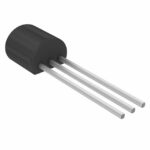 PN4392 TIN/LEAD
The activity of extra discounts on wholesale prices is in full swing…
Please fill in your contact information and we will send you the latest wholesale price list.




