 ChipApex | Global Electronic Components Supplier
SEARCH
Search Product
Search Post
— IC芯片 | 连接器 | 传感器 | 被动器件 —
Search productSearch post
— IC芯片 | 连接器 | 传感器 | 被动器件 —
Consult the customer manager about the wholesale price.
consultation hotline:86-132-6715-2157
email:[email protected]
Contact the product manager for consultation. One-stop consultation is available.
Do you want a lower wholesale price? Please send us your inquiry and we will reply immediately.
The PN5179 is an NPN silicon RF small signal transistor designed for low noise UHF/VHF amplifiers and high output UHF oscillators. It operates with collector currents ranging from 100 µA to 30 mA in common emitter or common base configurations. Key electrical parameters include a collector-emitter voltage of 12 V, a collector-base breakdown voltage of 20 V, and a continuous collector current limit of 50 mA. The device features a transition frequency (fT) between 900 MHz and 2000 MHz at 5 mA, a minimum DC current gain (hFE) of 25, and a typical power gain of 15 dB at 200 MHz.
Verify the specific package variant required, as the PN5179 designation covers multiple physical packages including TO-92 and SOT-23. Confirm thermal resistance values corresponding to the selected package style, as junction-to-ambient ratings differ significantly between through-hole and surface mount options. Ensure the ordering suffix matches the desired packaging format such as bulk or tape and reel.
Select this component when designing circuits requiring an NPN RF transistor with a 12 V collector-emitter rating and high transition frequency up to 2 GHz. Consider the total device dissipation limits, which vary by package type, to ensure adequate heat sinking or PCB layout for thermal management. Verify that the operating collector current remains within the specified range to maintain optimal noise figure and gain characteristics.
The PN5179 belongs to a family of NPN RF transistors manufactured using Process 40 technology. It shares functional similarities with related part numbers such as MPS5179 and MMBT5179, differing primarily in physical package configuration. These devices are engineered specifically for radio frequency signal processing tasks where low noise and stable oscillation are critical requirements.
MPS5179 and MMBT5179 are electrically equivalent alternatives within the same product family. Substitution requires verifying that the replacement package type fits the target footprint and that the thermal resistance characteristics align with the system's cooling capabilities.
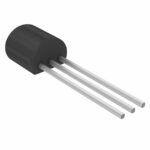 PN5179
The activity of extra discounts on wholesale prices is in full swing…
Please fill in your contact information and we will send you the latest wholesale price list.






