 ChipApex | Global Electronic Components Supplier
SEARCH
Search Product
Search Post
— IC芯片 | 连接器 | 传感器 | 被动器件 —
Search productSearch post
— IC芯片 | 连接器 | 传感器 | 被动器件 —
Consult the customer manager about the wholesale price.
consultation hotline:86-132-6715-2157
email:[email protected]
Contact the product manager for consultation. One-stop consultation is available.
Do you want a lower wholesale price? Please send us your inquiry and we will reply immediately.
The Vishay Siliconix SI4204DY-T1-GE3 is a dual N-channel MOSFET utilizing TrenchFET technology, housed in an SO-8 package. It features a drain-source voltage (VDS) of 20 V and a continuous drain current (ID) of 19.8 A at TC = 25 °C. The on-state resistance (RDS(on)) is typically 0.0046 Ω at VGS = 10 V and ID = 10 A, or 0.006 Ω at VGS = 4.5 V and ID = 8 A. Total gate charge (Qg) is typically 45 nC at VGS = 10 V. The device supports an operating junction temperature range from -55 °C to +150 °C.
Verify the component against official Vishay datasheet document number 65154 to confirm technical specifications and pinout alignment. Ensure that the ordering suffix matches the required lead-free and halogen-free compliance standards. Cross-reference manufacturer part numbers with authorized distributor listings to validate authenticity before integration into production designs.
Select this component when a compact dual N-channel solution is required for low-voltage switching applications. Evaluate thermal management requirements based on the specified junction-to-ambient and junction-to-foot thermal resistances. Confirm that the gate drive voltage aligns with the specified thresholds for optimal on-resistance performance under expected load conditions.
This part belongs to the Si4204 series of dual N-channel MOSFETs manufactured by Vishay Siliconix. It is designed as a space-efficient alternative to discrete single-channel devices, integrating two independent channels in an SO-8 footprint. The product line emphasizes high current density and low conduction losses suitable for portable electronics.
Direct substitutes must match the 20 V rating, dual N-channel topology, and SO-8 package dimensions. Verify equivalent RDS(on) values and thermal characteristics to ensure compatibility with existing board layouts and cooling strategies without redesigning the circuit.
The maximum pulsed drain current (IDM) is 50 A with a pulse width of 10 µs.
Yes, the datasheet specifies reverse recovery time (trr), charge (Qrr), and fall/rise times for the intrinsic body diode.
Yes, it is compliant with the RoHS Directive 2002/95/EC and is defined as halogen-free according to IEC 61249-2-21.
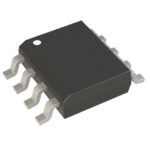 SI4204DY-T1-GE3
The activity of extra discounts on wholesale prices is in full swing…
Please fill in your contact information and we will send you the latest wholesale price list.





