 ChipApex | Global Electronic Components Supplier

SEARCH
Search Product
Search Post
Search productSearch post
Consult the customer manager about the wholesale price.
consultation hotline:86-132-6715-2157
email:[email protected]
Contact the product manager for consultation. One-stop consultation is available.
Do you want a lower wholesale price? Please send us your inquiry and we will reply immediately.
ST13005 is listed in the Single Bipolar Transistors range at ChipApex. The manufacturer field lists STMicroelectronics. Its product description is TRANS NPN 400V 4A TO-220. Review the specifications below when checking this part for your BOM.
The ST13005 is a high voltage fast-switching NPN power transistor manufactured using high voltage multi epitaxial planar technology. It features a cellular emitter structure with planar edge termination to enhance switching speeds while maintaining a wide Reverse Biased Safe Operating Area (RBSOA). The device provides a collector-emitter sustaining voltage of 400 V and a collector-base voltage of 700 V, with a continuous collector current rating of 4 A and peak current of 8 A. Total power dissipation reaches 75 W at case temperatures up to 25 °C. DC current gain groups are pre-selected for specific performance tiers.
Verify the specific marking code on the component body against the datasheet table to confirm the exact DC current gain group (A, C, D, E, or F), as production availability determines shipment. Confirm package type matches TO-220 specifications. Ensure thermal management design accounts for the maximum junction temperature of 150 °C and thermal resistance values provided in the electrical ratings section.
Select this component when high voltage isolation and rapid switching transitions are required for power conversion circuits. The pre-selection of DC current gain allows designers to match specific drive requirements without extensive binning. Consider the thermal resistance from junction to ambient when designing heatsinking solutions for continuous operation above 25 °C case temperature.
This device belongs to the family of high voltage bipolar power transistors designed for efficient energy conversion. It utilizes advanced planar edge termination techniques common in modern power semiconductor manufacturing to achieve high breakdown voltages. The product is classified as active production data, indicating ongoing manufacturing support and standard availability through authorized distribution channels.
Direct substitutes must match the 400V VCEO, 700V VCBO, and 4A IC ratings within a TO-220 package. Verify that alternative components offer comparable switching times and RBSOA characteristics to ensure circuit stability under inductive load conditions.
The marking codes (13005 A, C, D, E, and F) indicate different pre-selected groups of DC current gain (hFE). These groups allow for tighter control over gain variations during production to suit specific application needs.
The cellular emitter structure, used in conjunction with planar edge termination, significantly enhances the switching speed of the transistor while simultaneously maintaining a wide Reverse Biased Safe Operating Area (RBSOA).
The maximum operating junction temperature (TJ) for the ST13005 is 150 °C.
Explore related parts through Bipolar (BJT), Transistors, Discrete Semiconductor Products, all product categories.
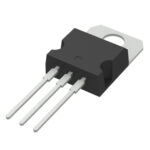 ST13005

The activity of extra discounts on wholesale prices is in full swing…
Please fill in your contact information and we will send you the latest wholesale price list.





