 ChipApex | Global Electronic Components Supplier
SEARCH
Search Product
Search Post
— IC芯片 | 连接器 | 传感器 | 被动器件 —
Search productSearch post
— IC芯片 | 连接器 | 传感器 | 被动器件 —
Consult the customer manager about the wholesale price.
consultation hotline:86-132-6715-2157
email:[email protected]
Contact the product manager for consultation. One-stop consultation is available.
Do you want a lower wholesale price? Please send us your inquiry and we will reply immediately.
The STGF7NB60SL is an N-channel IGBT from the PowerMESH family, designed for low-frequency applications below 1 kHz. It features a maximum continuous collector current of 7 A and a collector-emitter voltage rating of 600 V. The device operates within a temperature range of -55°C to 150°C, with a maximum power dissipation of 25 W. Key electrical parameters include a collector-emitter saturation voltage of 1.6 V and a gate-emitter voltage limit of 20 V. Packaged in a TO-220FP through-hole housing measuring 16.4 mm in height and 10.4 mm in length, it supports switching speeds up to 1 MHz.
Verify component authenticity by checking manufacturer markings against official datasheet specifications. Confirm package dimensions match the TO-220FP standard and validate electrical parameters such as Vceo and Ic ratings. Ensure compliance with RoHS standards if required by the target application environment. Cross-reference ordering suffixes to confirm specific variant availability.
Select this component for designs prioritizing low conduction losses at frequencies under 1 kHz due to its specialized PowerMESH optimization. Evaluate thermal management requirements based on the 25 W power dissipation limit and TO-220FP package thermal resistance. Compare against higher speed variants if switching frequencies exceed the intended operational range. Ensure gate drive circuits accommodate the specified 20 V maximum gate-emitter voltage.
This part belongs to the PowerMESH IGBT family developed by STMicroelectronics. The 'S' suffix indicates optimization for minimum on-voltage drop in low-frequency contexts. It complements other devices in the series offering varying current and voltage ratings while maintaining consistent technological benefits like low gate charge and high current capability.
STGP10NB60SD is a documented alternative featuring similar low-drop characteristics but with a 16 A current rating and integrated fast recovery diode. Verify pin compatibility and thermal performance differences before substitution.
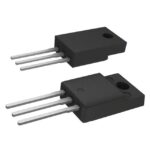 STGF7NB60SL
The activity of extra discounts on wholesale prices is in full swing…
Please fill in your contact information and we will send you the latest wholesale price list.





