 ChipApex | Global Electronic Components Supplier
SEARCH
Search Product
Search Post
— IC芯片 | 连接器 | 传感器 | 被动器件 —
Search productSearch post
— IC芯片 | 连接器 | 传感器 | 被动器件 —
Consult the customer manager about the wholesale price.
consultation hotline:86-132-6715-2157
email:[email protected]
Contact the product manager for consultation. One-stop consultation is available.
Do you want a lower wholesale price? Please send us your inquiry and we will reply immediately.
The TMC1340-SO is a smart integrated stepper motor driver manufactured by Analog Devices Inc./Maxim Integrated. It features a serial communication interface (SPI, UART) and various diagnostic functions. The device integrates a 256µ step internal interpolator, two fully integrated 36V half-bridges with a maximum current of 3.0A, and non-dissipative integrated current sensing. Key specifications include a supply voltage range of 4.5V to 36V, logic I/O power supply from 2.2V to 5.5V, and an operating temperature range of -40°C to +125°C. It utilizes StealthChop2™ for silent operation and SpreadCycle™ for high dynamic control.
Verify the specific suffix 'SO' against official datasheets to confirm the package type, typically TSSOP38. Ensure compatibility with the required voltage levels and communication protocols before integration. Cross-reference the manufacturer part number with authorized distributors to confirm availability and authenticity. Check for any specific ordering information regarding tape and reel or tube packaging options provided by the supplier.
Select the TMC1340-SO when high-resolution microstepping up to 256µ is required alongside silent operation capabilities. Consider this component for applications needing robust diagnostic features like stall detection and temperature monitoring. Evaluate the 3.0A current capability against the motor requirements. Ensure the system design accommodates the specified logic voltage range and thermal management needs for the chosen package.
The TMC1340 belongs to the Trinamic TMC series of intelligent stepper motor drivers. This family is known for integrating advanced motion control algorithms directly into the driver IC. The TMC1340 specifically targets applications requiring precise control, low noise, and extensive diagnostics in a compact form factor, serving as a solution for modern automation and precision positioning tasks.
Check for direct pin-compatible replacements within the TMC series, such as the TMC2240 or TMC5130, depending on interface and current requirements. Verify that alternative components support the necessary microstepping resolution and diagnostic features. Ensure voltage ratings and package dimensions match the existing PCB layout constraints.
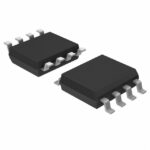 TMC1340-SO
The activity of extra discounts on wholesale prices is in full swing…
Please fill in your contact information and we will send you the latest wholesale price list.





