 ChipApex | Global Electronic Components Supplier
SEARCH
Search Product
Search Post
— IC芯片 | 连接器 | 传感器 | 被动器件 —
Search productSearch post
— IC芯片 | 连接器 | 传感器 | 被动器件 —
Consult the customer manager about the wholesale price.
consultation hotline:86-132-6715-2157
email:[email protected]
Contact the product manager for consultation. One-stop consultation is available.
Do you want a lower wholesale price? Please send us your inquiry and we will reply immediately.
The TPC8221-H is a dual N-channel power MOSFET utilizing Toshiba's U-MOS III-H silicon technology, housed in a compact SOP-8 package. It features a drain-source breakdown voltage of 30 V and a continuous drain current rating of 6 A. The device achieves a typical low on-resistance of 22 mΩ at VGS = 4.5 V. Key electrical parameters include a gate threshold voltage range of 1.3 to 2.3 V, a maximum leakage current of 10 µA, and a total gate charge of 12 nC. Thermal characteristics specify a channel-to-ambient resistance of 83.3 °C/W for single operation.
Verify the specific ordering suffix against official Toshiba Semiconductor and Storage documentation to confirm environmental compliance status, such as RoHS compatibility or lead-free designation. Confirm that the requested part number matches the exact package type and internal circuit configuration required for the design. Cross-reference datasheet revision numbers to ensure alignment with current manufacturing specifications.
Select this component for applications requiring dual N-channel isolation in a space-constrained SOP-8 footprint. Evaluate thermal management requirements based on the specified channel-to-ambient resistance values for single or dual operation modes. Ensure the operating voltage remains within the 30 V breakdown limit and that gate drive signals accommodate the 1.3 to 2.3 V threshold range for reliable enhancement mode switching.
This device belongs to the TPC8221-H series of silicon N-channel MOSFETs developed by Toshiba Semiconductor and Storage. It utilizes the U-MOS III-H process technology to optimize performance metrics such as on-resistance and switching speed. The product line targets general-purpose electronics, focusing on portable devices and power conversion systems where efficiency and physical size are critical design constraints.
Consult official Toshiba documentation for confirmed substitute part numbers. Verify pinout compatibility and absolute maximum ratings before substituting any alternative components.
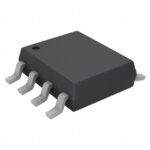 TPC8221-H,LQ(S
The activity of extra discounts on wholesale prices is in full swing…
Please fill in your contact information and we will send you the latest wholesale price list.





