ChipApex | Global Electronic Components Supplier
SEARCH
Search Product
Search Post
— IC芯片 | 连接器 | 传感器 | 被动器件 —
Search productSearch post
— IC芯片 | 连接器 | 传感器 | 被动器件 —
Consult the customer manager about the wholesale price.
consultation hotline:86-132-6715-2157
email:[email protected]
Contact the product manager for consultation. One-stop consultation is available.
Do you want a lower wholesale price? Please send us your inquiry and we will reply immediately.
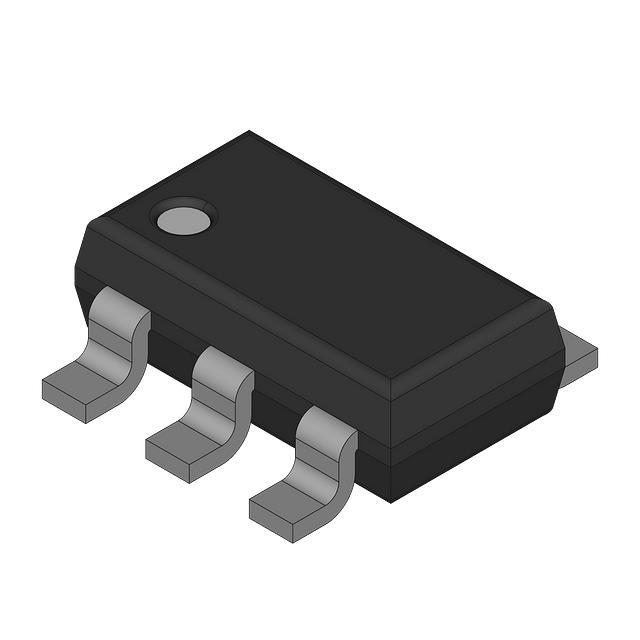
The UPA509TA-T2-A is a complementary transistor array manufactured by Renesas Electronics Corporation. It features a PNP and NPN bipolar junction transistor (BJT) pair housed in a single SOT-363 surface-mount package. The device is designed for general-purpose switching applications, offering high current handling capabilities with a collector current of 100mA. Key electrical parameters include a maximum collector-emitter voltage of 50V for both transistors and a DC current gain (hFE) typically ranging from 100 to 300 at a collector current of 10mA. The component operates within a standard temperature range and utilizes a compact footprint suitable for space-constrained circuit designs.
Verify the specific suffix T2-A against official Renesas documentation to confirm pinout orientation and tape-and-reel specifications. Ensure compatibility with automated assembly processes by checking reel dimensions and feeder requirements. Confirm RoHS compliance status through the manufacturer's latest environmental declaration before procurement.
Select this component when a matched complementary pair is required for push-pull configurations or differential signaling. Compare hFE matching characteristics if precise symmetry is critical for the application. Consider thermal dissipation limits in dense PCB layouts due to the small package size.
This part belongs to Renesas' discrete transistor portfolio, specifically the UPA series of complementary arrays. These components are engineered to replace dual discrete transistors, reducing board space and assembly complexity. The UPA509TA variant is a standard industry-compatible replacement for similar complementary pairs used in consumer electronics and industrial control systems.
Check for direct replacements such as the UPA509TA-T2-E or other compatible complementary BJT arrays from Renesas or third-party manufacturers. Verify that alternative parts match the 50V voltage rating and 100mA current capacity. Ensure package dimensions and pin assignments are identical to avoid PCB redesign.
 UPA509TA-T2-A
The activity of extra discounts on wholesale prices is in full swing…
Please fill in your contact information and we will send you the latest wholesale price list.