ChipApex | Global Electronic Components Supplier
SEARCH
Search Product
Search Post
— IC芯片 | 连接器 | 传感器 | 被动器件 —
Search productSearch post
— IC芯片 | 连接器 | 传感器 | 被动器件 —
Consult the customer manager about the wholesale price.
consultation hotline:86-132-6715-2157
email:[email protected]
Contact the product manager for consultation. One-stop consultation is available.
Do you want a lower wholesale price? Please send us your inquiry and we will reply immediately.
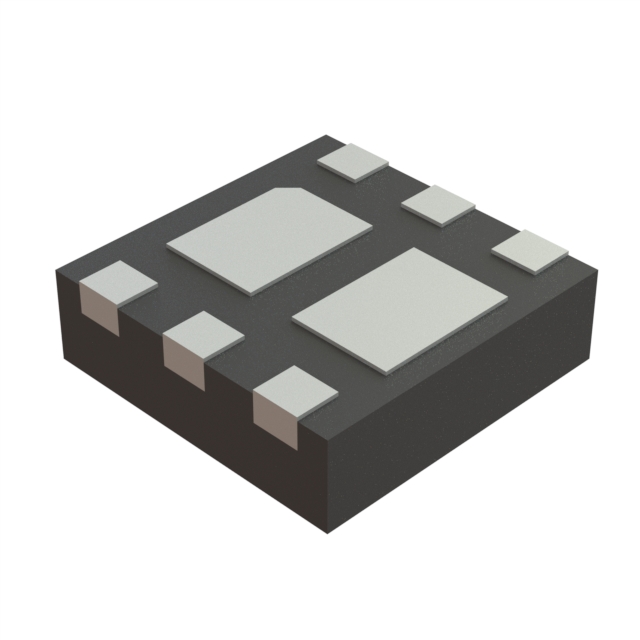
The UT6JA3TCR is a dual P-channel power MOSFET manufactured by ROHM Semiconductor, housed in a DFN-2020-8 surface-mount package. It features a drain-source voltage (Vds) of 20 V and a continuous drain current (Id) of 5 A. The device exhibits a typical on-resistance (Rds(on)) of 59 mOhms at Vgs = -4.5 V. Gate-source voltage limits are ±8 V, with a threshold voltage (Vgs(th)) of 1.5 V. Total gate charge (Qg) is 6.5 nC. Power dissipation is rated at 2 W. Operating temperature ranges from -55°C to +150°C. Rise time is 36 ns, and fall time is 30 ns.
Verify the specific ordering code UT6JA3TCR against the manufacturer's latest datasheet to confirm pinout compatibility and electrical tolerances. Ensure that the DFN-2020-8 package dimensions align with the target PCB land pattern. Confirm RoHS compliance status if required by regulatory standards. Cross-reference the maximum power dissipation ratings with the intended thermal design constraints before finalizing procurement.
Select this component when a dual P-channel topology is required within a small surface-mount envelope. The 20 V rating suits low-voltage systems, while the 5 A current capacity supports moderate load requirements. Compare the 59 mOhm on-resistance against alternative packages to balance conduction losses with thermal management capabilities. Verify that the 6.5 nC gate charge matches the driving circuit's speed and power efficiency targets.
This part belongs to ROHM's UT6JA series of dual P-channel MOSFETs designed for general-purpose switching. It shares the DFN-2020-8 package form factor with other variants in the family but differs in voltage and current ratings. The series targets cost-sensitive consumer electronics and industrial control applications where board space is limited.
Direct substitutes include UT6J3TCR1 (2A, 85 mOhm) or UT6JA2TCR (30V, 4A). Verify that the replacement's Rds(on), Id, and Vds ratings meet or exceed the original design specifications. Check package compatibility and pinout alignment to ensure seamless integration without PCB redesign.
 UT6JA3TCR
The activity of extra discounts on wholesale prices is in full swing…
Please fill in your contact information and we will send you the latest wholesale price list.