 ChipApex | Global Electronic Components Supplier
SEARCH
Search Product
Search Post
— IC芯片 | 连接器 | 传感器 | 被动器件 —
Search productSearch post
— IC芯片 | 连接器 | 传感器 | 被动器件 —
Consult the customer manager about the wholesale price.
consultation hotline:86-132-6715-2157
email:[email protected]
Contact the product manager for consultation. One-stop consultation is available.
Do you want a lower wholesale price? Please send us your inquiry and we will reply immediately.
The XC18V512SO20I is a 3.3V in-system programmable configuration PROM from the Xilinx XC18V00 series, housed in a 20-pin SOIC package. It provides 512-kilobit (524,288-bit) storage capacity for Xilinx FPGA configuration bitstreams. The device supports dual configuration modes: serial (up to 33 MHz) and parallel (up to 264 Mb/s at 33 MHz). It features IEEE Std 1149.1 JTAG support for programming and boundary-scan testing, with an endurance of 20,000 program/erase cycles over the commercial/industrial temperature range of –40°C to +85°C.
Verify that the component matches the specific 20-pin SOIC package designation within the XC18V00 family. Confirm compatibility with the target Xilinx FPGA's voltage requirements and configuration mode settings. Ensure that the design accounts for the OE/RESET polarity constraints and proper pull-up resistor values for the DONE signal driving the CE pin.
Select this device when a 512-kilobit non-volatile memory solution is required for smaller Xilinx FPGA configurations. Consider its low-power standby mode and 3.3V operation for systems where power efficiency and voltage levels are critical. Evaluate the need for JTAG-based in-system reprogrammability versus one-time programmable alternatives like the XC17V00 series.
The XC18V512SO20I belongs to the XC18V00 series of in-system programmable configuration PROMs designed by Xilinx. This series includes devices with capacities ranging from 512 kilobits to 4 megabits, offering flexible solutions for storing FPGA configuration data. The SO20 suffix indicates the 20-pin Small Outline Integrated Circuit package variant available for these devices.
XC18V512PC20I
The 20-pin packages do not have a dedicated CF pin. The CF function can be routed to pin 7 by setting the CF --> D4 option, provided the parallel output mode is not used.
The Chip Enable Output (CEO) drives the CE input of the next PROM in a daisy chain. It goes Low when the internal address counter exceeds its terminal count, enabling the subsequent device in the cascade.
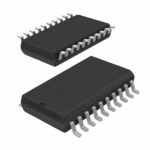 XC18V512SO20I
The activity of extra discounts on wholesale prices is in full swing…
Please fill in your contact information and we will send you the latest wholesale price list.





