 ChipApex | Global Electronic Components Supplier
SEARCH
Search Product
Search Post
— IC芯片 | 连接器 | 传感器 | 被动器件 —
Search productSearch post
— IC芯片 | 连接器 | 传感器 | 被动器件 —
Consult the customer manager about the wholesale price.
consultation hotline:86-132-6715-2157
email:[email protected]
Contact the product manager for consultation. One-stop consultation is available.
Do you want a lower wholesale price? Please send us your inquiry and we will reply immediately.
The ZMV931TC is a silicon hyperabrupt varactor diode from the ZC930, ZMV930, and ZV931 series manufactured by Diodes Incorporated. It provides closely controlled capacitance-voltage characteristics for frequency control applications. The device operates with a maximum reverse voltage of 12 V and features low reverse current leakage, typically 200 pA at 8 V, ensuring excellent phase noise performance. Key electrical parameters include a minimum Q factor of 300 at 4 V and 50 MHz, and capacitance values ranging from 7.80 pF to 4.00 pF as reverse voltage increases from 1 V to 4 V.
Verify the specific ordering suffix against official documentation before procurement. Suffixes such as TA or TC indicate reel size and quantity per reel, which affects packaging logistics but not the component's electrical function. Confirm RoHS compliance status through the manufacturer's latest environmental statements. Ensure the part number matches the required package type, as variations exist within the series.
Select the ZMV931TC when high Q and low phase noise are critical for frequency stability. The hyperabrupt junction profile supports octave tuning requirements. Compare capacitance tolerances against circuit specifications to ensure adequate frequency control range. Verify that the operating temperature range aligns with the application environment, as thermal coefficients affect capacitance stability.
This component belongs to the ZC930, ZMV930, and ZV931 series of silicon 12V hyperabrupt varactor diodes. The series offers various capacitance ranges and Q factors to suit different filtering needs. The ZMV931 variant specifically targets applications requiring a minimum Q of 300 at 50 MHz. These devices are designed for compact surface mount implementations in RF circuits.
Substitutes within the same series include ZC931TA and ZV931V2TA. These parts share identical electrical characteristics and pinouts but may differ in packaging orientation or marking codes. Verify that any replacement maintains the required Q factor and capacitance tolerance for the specific circuit design.
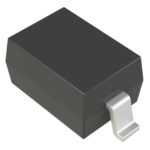 ZMV931TC
The activity of extra discounts on wholesale prices is in full swing…
Please fill in your contact information and we will send you the latest wholesale price list.







