 ChipApex | Global Electronic Components Supplier
SEARCH
Search Product
Search Post
— IC芯片 | 连接器 | 传感器 | 被动器件 —
Search productSearch post
— IC芯片 | 连接器 | 传感器 | 被动器件 —
The trend of science and technology is changing rapidly.
If you’ve spent any time staring at a schematic, you’ve seen the triangle. Two inputs, one output, and a gain symbol that looks deceptively simple. That’s the Operational Amplifier, or Op-Amp.
It is the undisputed workhorse of analog electronics. Whether you are buffering a sensor signal for an IoT device or building a high-fidelity audio preamp, the Op-Amp is likely doing the heavy lifting.
But here is the thing: Not all Op-Amps are created equal.
Treating them as interchangeable black boxes is a recipe for a noisy, unstable, or distorted circuit. At ChipApex, we see engineers struggle with this every day. So, let’s strip away the academic fluff and talk about what actually matters when you are selecting a chip for your next design.
In a textbook, an Op-Amp is perfect. It has infinite gain, infinite input impedance, and zero noise. We rely on two “Golden Rules” to analyze these ideal circuits:
But in the real world? Perfection doesn’t exist.
When you open a datasheet, you aren’t looking for “infinite” anything. You are looking for the specific non-ideal parameters that will ruin your signal if you ignore them.
When you are browsing for parts, ignore the marketing fluff and look at these four numbers. They determine if your circuit will actually work.
1. Gain Bandwidth Product (GBWP)
Think of this as the speed limit for your amplifier. It’s the frequency at which the op-amp’s gain drops to 1.
2. Slew Rate
This measures how fast the output voltage can change, usually in Volts per microsecond (V/µs).
3. Input Offset Voltage ( VOSVOS )
Ideally, 0V in means 0V out. In reality, internal transistor mismatches create a small DC error voltage at the input.
4. Common-Mode Rejection Ratio (CMRR)
This is your defense against noise. It measures how well the Op-Amp ignores voltage that is common to both inputs (like that annoying 50/60Hz hum from your power supply). A high CMRR (measured in dB) is non-negotiable for instrumentation.
Selecting the right component is always a balancing act between performance, power, and cost. Here is a quick comparison to help you decide.
| Feature | Bipolar (BJT) Input | JFET / CMOS Input |
|---|---|---|
| Input Bias Current | High (nA to µA) | Extremely Low (pA to fA) |
| Noise Performance | Low noise at low impedances | Higher voltage noise, low current noise |
| Best For | Low impedance sources, audio | High impedance sensors (piezo, pH) |
| Typical Parts | NE5532DR, LM358DR | TL072CDR, MCP6002-I/SN |
Our Recommendations:
Engineering Insight: When designing for mass production, balancing performance with BOM cost is critical. While the NE5532DR remains a highly cost-effective standard for general audio, you might reserve premium parts like the OPA2134PA for high-end signal paths to optimize your overall project budget.
Whether you need a generic dual op-amp for a hobby project or a high-precision, low-noise amplifier for medical instrumentation, ChipApex stocks a comprehensive range of analog ICs.
We carry authentic parts from leading manufacturers including Texas Instruments (TI), STMicroelectronics, Analog Devices, and Microchip.
Why source Op-Amps from ChipApex?
Search our inventory today by part number (e.g., LM358DR, TL072CDR, NE5532DR) and ensure your analog signal chain is built on a solid foundation.
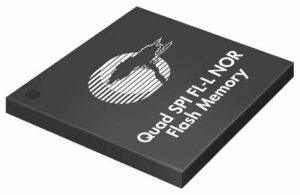
Discover how NOR flash enables fast code execution in embedded systems, its key types (Parallel/SPI), and how to source authentic, traceable ICs from trusted suppliers.
View details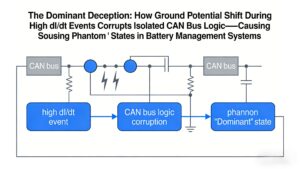
Ground potential shift during high dI/dt regen braking causes isolated CAN receivers to output false dominant states, locking EV BMS networks. Discover robust solutions like TJA1044GT/3Z + common-mode filtering validated by ChipApex.
View details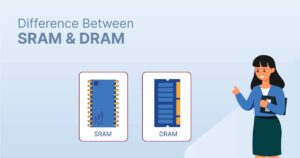
Discover why SRAM remains essential in industrial, medical & aerospace systems—thanks to its deterministic performance and long-term reliability. Trusted by engineers worldwide.
View details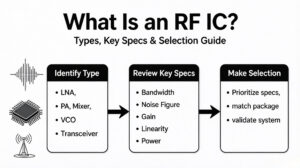
Learn what an RF IC is, how LNAs, PAs, mixers, attenuators and transceivers differ, and how to choose the right RF component. Includes verified part numbers and layout tips.
View details
The activity of extra discounts on wholesale prices is in full swing…
Please fill in your contact information and we will send you the latest wholesale price list.

