 ChipApex | Global Electronic Components Supplier
SEARCH
Search Product
Search Post
— IC芯片 | 连接器 | 传感器 | 被动器件 —
Search productSearch post
— IC芯片 | 连接器 | 传感器 | 被动器件 —
The trend of science and technology is changing rapidly.
When your car’s engine control unit boots in milliseconds…
When a medical device executes firmware the moment it’s powered on…
When industrial machinery runs mission-critical code without delay…
Behind these instant-start systems lies a quiet but essential technology: NOR flash memory.
While NAND flash dominates high-capacity storage, NOR flash remains irreplaceable for applications that demand fast, reliable code execution directly from memory (XIP – eXecute In Place).
In this guide—written for engineers designing embedded systems and procurement teams managing component risk—we’ll explain:
Let’s dive in.
NOR flash is a type of non-volatile memory that retains data without power and allows random access to individual bytes—making it ideal for storing and executing program code directly from the memory chip itself.
Unlike NAND flash (which reads data sequentially in blocks), NOR flash uses a “NOR” logic gate architecture that enables CPU-like direct addressing. This is why it’s the go-to choice for boot code, firmware, BIOS, and real-time control applications.
Key characteristics:
💡 Fun fact: The name “NOR” comes from the internal circuit design—just like NAND, it’s named after the logic gate structure used in its memory cells.
Each memory cell in NOR flash is connected directly to a bit line, allowing the processor to access any memory address instantly—much like traditional RAM, but non-volatile.
This architecture enables:
However, because each cell requires more transistors, NOR flash scales poorly in density—which is why it’s rarely used for large data storage.
There are two main interfaces for NOR flash, each with distinct trade-offs:
| Feature | Parallel NOR | SPI NOR |
|---|---|---|
| Interface Pins | 30–50+ pins | Only 4–8 pins (CLK, CS, DI, DO) |
| Speed | Very fast (suitable for high-performance boot) | Moderate (but improving with Quad/Octal SPI) |
| PCB Complexity | High (wide traces, more routing) | Low (simple layout, saves space) |
| Cost | Higher (more pins = larger package) | Lower (smaller packages like SOIC-8, WSON) |
| Typical Use | Automotive ECUs, aerospace, legacy industrial | IoT devices, wearables, modern microcontrollers |
📌 Procurement Tip: Always confirm whether your MCU supports Quad SPI or Octal SPI—newer high-speed SPI NOR chips (e.g., from Winbond, Macronix) can rival Parallel NOR performance with far fewer pins.
Leading brands you’ll encounter in the supply chain:
Packages include:
⚠️ Warning: Due to long lead times and allocation, many NOR flash parts are targeted by counterfeiters. Remarked industrial-grade chips often end up in consumer markets—posing serious field-failure risks.
NOR flash thrives in applications where reliability, speed, and deterministic behavior matter more than storage capacity:
🔑 Critical insight: Even if your system uses NAND for OS storage, it almost certainly uses NOR flash (or embedded flash) for the initial bootloader.
Still unsure which memory type your design needs? Use this decision tree:
In short: NOR = code execution, NAND = data storage. They’re complementary—not competitors.
The ongoing semiconductor shortage has made NOR flash—especially automotive-grade and high-density Parallel NOR—highly sought after and vulnerable to fraud.
Common risks include:
At ChipApex, we supply 100% authentic NOR flash ICs from authorized channels, with real-time stock visibility and documentation to support your quality audits. Every shipment includes verifiable batch information—so you ship with confidence.
Explore our in-stock inventory of NOR flash memory from trusted manufacturers—including Winbond, Macronix, Micron, and Infineon—all ready for immediate shipment.
🔍 Search by exact part number (e.g., W25Q128JVSIQ, MX25L12833FZNI-10G, MT28EW128ABA1LJS-0SIT) to check stock and get instant quotes.
Discover what DRAM is, how it works, its types, and why choosing authentic, RoHS-compliant DRAM chips matters. Source reliable DRAM from ChipApex—global supplier with full traceability.
View details
Stop guessing which Op-Amp to use. We break down GBWP, Slew Rate, and Offset Voltage with real engineering insights. Find the right parts like NE5532DR & LM358DR at ChipApex.
View details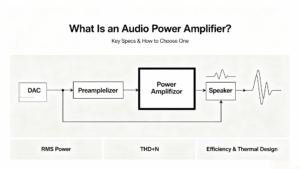
Learn what an audio power amplifier is, the differences between Class D and AB, and how to choose the right IC. Includes PCB layout tips and part recommendations. Shop at ChipApex.
View details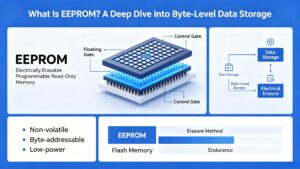
What is EEPROM? Learn byte-level storage, EEPROM vs Flash, I2C/SPI, BOM selection & sourcing risks. Authentic EEPROMs at ChipApex.
View details
The activity of extra discounts on wholesale prices is in full swing…
Please fill in your contact information and we will send you the latest wholesale price list.