 ChipApex | Global Electronic Components Supplier
SEARCH
Search Product
Search Post
— IC芯片 | 连接器 | 传感器 | 被动器件 —
Search productSearch post
— IC芯片 | 连接器 | 传感器 | 被动器件 —
The trend of science and technology is changing rapidly.
In the world of electronics, memory components play a critical role in system performance—and DRAM (Dynamic Random-Access Memory) is one of the most widely used types. Whether you’re an engineer designing next-gen devices or a procurement specialist sourcing reliable parts, understanding DRAM is essential for making informed decisions.
DRAM stands for Dynamic Random-Access Memory. It’s a type of volatile memory that stores each bit of data in a separate capacitor within an integrated circuit. Because capacitors leak charge over time, DRAM must be refreshed periodically to retain data—hence the term “dynamic.”
Unlike non-volatile memory (like flash storage), DRAM loses its contents when power is turned off. However, its high density and cost-effectiveness make it ideal for use as main system memory (RAM) in computers, servers, smartphones, and embedded systems.
At its core, a DRAM cell consists of:
The capacitor holds the bit of information (a “1” or “0”), while the transistor acts as a switch to read or write the data. Because each cell is so simple, DRAM achieves high storage density at a lower cost per bit compared to other memory types like SRAM (Static RAM).
However, this simplicity comes with a trade-off: the need for constant refreshing (typically every few milliseconds), which introduces slight latency but remains acceptable for most computing applications.
Over the years, DRAM technology has evolved to meet growing performance demands. Common types include:
Choosing the right DRAM type depends on your application’s speed, power, and form factor requirements.
| Feature | DRAM | SRAM |
|---|---|---|
| Structure | 1 transistor + 1 capacitor | 6 transistors per cell |
| Speed | Slower | Faster |
| Cost | Lower | Higher |
| Density | High | Low |
| Refresh Needed? | Yes | No |
| Use Case | Main system memory (RAM) | CPU cache, high-speed buffers |
While SRAM is faster and doesn’t require refreshing, its complexity makes it impractical for large-scale memory. That’s why DRAM dominates as the go-to solution for primary memory in most electronic systems.
As global demand for memory chips grows, so does the risk of counterfeit components. Fake or remarked DRAM can cause system failures, security vulnerabilities, and costly downtime.
At ChipApex, we supply only authentic, RoHS-compliant DRAM chips sourced directly from trusted manufacturers. Every component comes with full traceability and rigorous quality verification—ensuring reliability for your designs and peace of mind for your procurement team.
We stock a wide range of DRAM ICs, including popular part numbers from Samsung, Micron, SK Hynix, and more, with fast delivery to over 100 countries.
Explore our inventory of genuine DRAM components today. Whether you’re prototyping, scaling production, or managing BOM shortages, ChipApex delivers the quality and service you can trust.
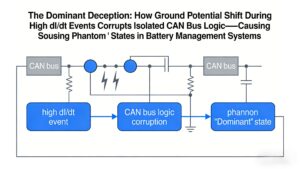
Ground potential shift during high dI/dt regen braking causes isolated CAN receivers to output false dominant states, locking EV BMS networks. Discover robust solutions like TJA1044GT/3Z + common-mode filtering validated by ChipApex.
View details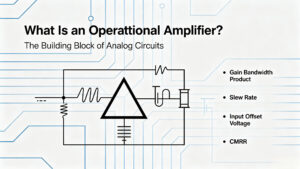
Stop guessing which Op-Amp to use. We break down GBWP, Slew Rate, and Offset Voltage with real engineering insights. Find the right parts like NE5532DR & LM358DR at ChipApex.
View details
Practical MCU selection guide for engineers: compare STM32, ESP32 & NXP, avoid counterfeits, and ensure supply chain reliability. Authored by ChipApex FAE.
View details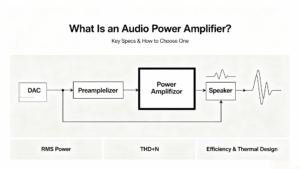
Learn what an audio power amplifier is, the differences between Class D and AB, and how to choose the right IC. Includes PCB layout tips and part recommendations. Shop at ChipApex.
View details
The activity of extra discounts on wholesale prices is in full swing…
Please fill in your contact information and we will send you the latest wholesale price list.

