 ChipApex | Global Electronic Components Supplier
SEARCH
Search Product
Search Post
— IC芯片 | 连接器 | 传感器 | 被动器件 —
Search productSearch post
— IC芯片 | 连接器 | 传感器 | 被动器件 —
The trend of science and technology is changing rapidly.
Every audio power amplifier design starts with the same fundamental challenge: converting a low-voltage line-level signal into the high-current drive required by a reactive speaker load. While the concept is straightforward, the execution is where engineering realities set in.
At ChipApex, we frequently work with hardware designers who are caught between conflicting requirements. They need high efficiency to keep enclosure temperatures safe, but they also demand low Total Harmonic Distortion (THD) for acoustic clarity. Furthermore, the shift toward portable and battery-operated audio devices means that power consumption is no longer just an electrical spec—it is a strict mechanical and thermal constraint. Let’s look at how to navigate these trade-offs when selecting an audio amplifier IC.
A preamplifier or DAC outputs a voltage signal. A power amplifier must convert that voltage into current. Because speakers present a low impedance load (typically 4Ω or 8Ω), the amplifier must act as a controlled current source. If the output stage cannot deliver the required current during transient peaks, the waveform clips. This clipping introduces harsh harmonic distortion that can damage high-frequency drivers.
Datasheets often highlight peak power ratings, but these numbers rarely reflect continuous operational limits. Focus on these three parameters instead:
1. RMS Power and Load Impedance
Continuous (RMS) power indicates what the amplifier can sustain without thermal shutdown. Always verify the RMS rating at your specific target impedance (e.g., 4Ω vs. 8Ω) and at a defined THD limit (usually 1% or 10%). Matching the amplifier’s continuous output to the speaker’s continuous rating prevents mechanical failure.
2. Total Harmonic Distortion + Noise (THD+N)
This metric quantifies signal degradation. High-fidelity home audio typically requires THD+N below 0.05%. However, for commercial background music or public address systems, a THD of 1% is often acoustically acceptable and allows for higher continuous power output.
3. Efficiency and Thermal Dissipation
Efficiency determines how much input power is converted to acoustic output versus waste heat. An amplifier operating at 50% efficiency and delivering 50W of audio power simultaneously dissipates 50W as heat. In sealed or compact enclosures, this thermal load dictates heatsink size and overall product dimensions.
️ Engineering Note: Damping Factor and Low-Frequency Control
Damping factor represents the ratio of speaker impedance to amplifier output impedance. A higher damping factor indicates tighter electrical control over the speaker cone. When damping factor is insufficient, the cone continues to oscillate after the audio signal ceases, resulting in uncontrolled, muddy bass response.
There is no universally superior amplifier class. The choice depends entirely on the application’s primary constraints.
Integrated audio amplifier ICs include built-in protection mechanisms (thermal shutdown, short-circuit protection, DC offset detection) and optimized internal layouts. For the vast majority of commercial products, they reduce engineering time and improve reliability.
Discrete transistor designs still exist in ultra-high-end audiophile equipment where specific sonic characteristics are desired. However, for standard B2B manufacturing and consumer electronics, integrated solutions provide the best balance of performance, protection, and cost.
Amplifier performance is heavily dependent on PCB layout. High-current output traces must be kept short and physically separated from sensitive low-level input traces to prevent coupling. A solid star-ground or split ground plane (analog vs. power) is necessary to prevent ground loops. Bulk decoupling capacitors should be placed directly at the amplifier’s supply pins. Poor layout introduces hum, oscillation, and EMI that cannot be corrected through software or external filtering.
| Feature | Class AB Amplifier | Class D Amplifier | Low-Power / Portable Amp |
|---|---|---|---|
| Efficiency | Moderate (50–70%) | Excellent (>90%) | Moderate to High |
| THD+N | Excellent (<0.03%) | Very Good (<0.1%) | Good (<0.3%) |
| Thermal Mgmt | Heavy heatsinks required | Minimal or none | Small heatsink or none |
| Best For | Hi-Fi stereo, studio monitors | Portable speakers, soundbars, subwoofers | Headphones, smart home, wearables |
| Typical Parts | TDA7297, LM1875T/NOPB | TPA3116D2DAD, TDA7492ETR | LM386N-1/NOPB, PAM8403DR-H |
| Limitations | High heat; bulky; heavy | EMI/RFI concerns; complex LC filter design | Low output power; limited headroom |
Engineering Insight: When optimizing Bill of Materials (BOM) costs, consider the total system cost rather than just the IC price. A lower-cost Class AB amplifier may require an expensive aluminum extrusion heatsink and a larger enclosure. In many cases, selecting a higher-efficiency Class D alternative like the TPA3116D2DAD reduces overall manufacturing cost by eliminating thermal management components.
ChipApex maintains inventory of genuine audio power amplifiers from Texas Instruments, STMicroelectronics, Analog Devices, and other major manufacturers. All components are 100% original with full traceability documentation.
Search our catalog by complete part number (e.g., TPA3116D2DAD, TDA7297, PAM8403DR-H) or filter by amplifier class, power output, and THD specifications to identify components that match your design requirements.
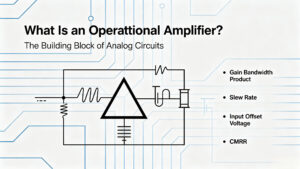
Stop guessing which Op-Amp to use. We break down GBWP, Slew Rate, and Offset Voltage with real engineering insights. Find the right parts like NE5532DR & LM358DR at ChipApex.
View details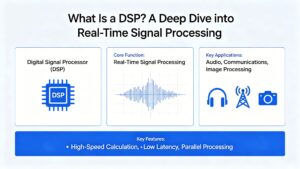
Learn how DSPs (Digital Signal Processors) enable real-time audio, industrial motor control, 5G communications & medical imaging. Compare DSP vs MCU, choose fixed vs floating-point DSPs, and source authentic DSP chips at ChipApex.
View details
Discover what DRAM is, how it works, its types, and why choosing authentic, RoHS-compliant DRAM chips matters. Source reliable DRAM from ChipApex—global supplier with full traceability.
View details
Practical MCU selection guide for engineers: compare STM32, ESP32 & NXP, avoid counterfeits, and ensure supply chain reliability. Authored by ChipApex FAE.
View details
The activity of extra discounts on wholesale prices is in full swing…
Please fill in your contact information and we will send you the latest wholesale price list.

