 ChipApex | Global Electronic Components Supplier
SEARCH
Search Product
Search Post
— IC芯片 | 连接器 | 传感器 | 被动器件 —
Search productSearch post
— IC芯片 | 连接器 | 传感器 | 被动器件 —
The trend of science and technology is changing rapidly.
An RF IC, or radio-frequency integrated circuit, is a chip that processes wireless signals between the antenna and the baseband processor. Instead of building the front end from discrete transistors, filters, and matching networks, an RF IC integrates functions such as amplification, mixing, frequency conversion, filtering, switching, attenuation, and modulation into a single package.
For B2B buyers and hardware engineers, RF ICs are not just “wireless chips.” They determine whether a product can reliably transmit, receive, and coexist with other signals in a crowded spectrum. A poor RF choice can cause short range, unstable links, failed certification, or costly PCB re-spins.
A typical RF front end sits between the antenna and the digital processor. On the receive side, weak signals from the antenna pass through matching networks, filters, switches, and low-noise amplifiers before reaching the demodulator or ADC. On the transmit side, baseband signals are modulated, up-converted, and amplified before being sent to the antenna.
RF ICs may be sold as:
Low-Noise Amplifier (LNA)
An LNA amplifies very weak received signals while adding as little noise as possible. It is usually the first active stage after the antenna, so its noise figure strongly affects overall receiver sensitivity.
Power Amplifier (PA)
A PA boosts the signal before transmission. PAs are judged by output power, efficiency, linearity, and thermal performance. In battery-powered devices, PA efficiency directly affects battery life.
RF Mixer
A mixer converts signals between RF and IF frequencies. It is used in up-conversion for transmitters and down-conversion for receivers.
RF Attenuator
An RF attenuator reduces signal amplitude with controlled accuracy. Digital attenuators are commonly used in transmit chains, receive chains, and test systems for gain leveling and power control.
RF Transceiver
A transceiver combines transmit and receive functions, often including modulation, demodulation, frequency synthesis, and gain control. It is common in Wi-Fi, Bluetooth, cellular, and proprietary sub-GHz systems.
RF Switch and Front-End Module
RF switches route signals between antennas and different bands. Front-end modules integrate PA, LNA, switch, and filter functions to save board space and simplify matching.
Frequency Range
The RF IC must cover the exact operating band. A part rated for 400 MHz to 4 GHz will not automatically work at sub-400 MHz narrowband or millimeter-wave applications.
Noise Figure (NF)
Noise figure matters most for LNAs and receiver front ends. Lower NF means better sensitivity for weak signals.
Gain and Gain Flatness
Gain shows how much the signal is amplified. Gain flatness matters in wideband systems where the amplifier must perform consistently across the band.
Output Power and P1dB
P1dB, or the 1 dB compression point, indicates usable linear output power. It is more practical than saturated power when estimating real-world transmit performance.
Linearity (IP3)
IP3 describes how well the device handles strong signals without creating intermodulation distortion. Higher IP3 is important in crowded RF environments.
Efficiency and Supply Voltage
For portable and IoT products, current consumption and power-added efficiency affect battery life and thermal design.
RF performance depends heavily on layout. Keep RF traces short, use controlled impedance where required, and place matching components close to the IC pins. Separate RF grounds from noisy digital grounds unless the datasheet specifies otherwise. Poor layout can add loss, reduce sensitivity, and cause spurious emissions that fail regulatory testing.
| Application | Typical RF IC Type | Example Parts |
|---|---|---|
| Receiver front end | LNA | ADL5521ACPZ-R7, MAX2659ELT+T |
| Transmitter output | Power Amplifier | SKY65116-21 |
| Frequency conversion | RF Mixer | ADL5350ACPZ-R7, LTC5567IUF#TRPBF |
| Gain / level control | Digital Attenuator | HMC1119LP4METR |
| Wi-Fi / IoT front end | Switch + LNA FEM | RFFM8250TR7, RFFM8850PTR7 |
| RF sampling front end | Transceiver / AFE | AFE7686IABJ |
Part numbers above are representative examples. Always confirm frequency range, package, supply voltage, lifecycle status, and ordering suffix against the latest datasheet before BOM release.
ChipApex supplies genuine RF ICs and front-end components from major manufacturers including Analog Devices, Qorvo, Skyworks, NXP, Infineon, STMicroelectronics, Texas Instruments, and others. All parts are sourced with full traceability to support production, R&D, and BOM optimization.
Search by complete part number or filter by frequency range, function, package, and manufacturer to find the right RF IC for your wireless design.
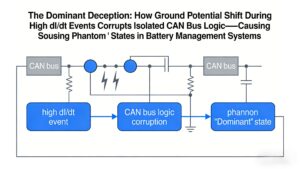
Ground potential shift during high dI/dt regen braking causes isolated CAN receivers to output false dominant states, locking EV BMS networks. Discover robust solutions like TJA1044GT/3Z + common-mode filtering validated by ChipApex.
View details
Practical MCU selection guide for engineers: compare STM32, ESP32 & NXP, avoid counterfeits, and ensure supply chain reliability. Authored by ChipApex FAE.
View details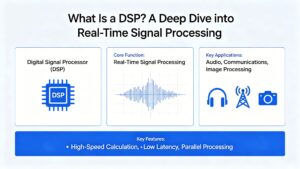
Learn how DSPs (Digital Signal Processors) enable real-time audio, industrial motor control, 5G communications & medical imaging. Compare DSP vs MCU, choose fixed vs floating-point DSPs, and source authentic DSP chips at ChipApex.
View details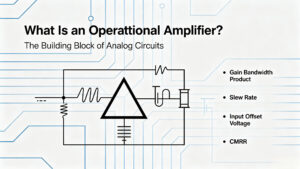
Stop guessing which Op-Amp to use. We break down GBWP, Slew Rate, and Offset Voltage with real engineering insights. Find the right parts like NE5532DR & LM358DR at ChipApex.
View details
The activity of extra discounts on wholesale prices is in full swing…
Please fill in your contact information and we will send you the latest wholesale price list.