 ChipApex | Global Electronic Components Supplier
SEARCH
Search Product
Search Post
— IC芯片 | 连接器 | 传感器 | 被动器件 —
Search productSearch post
— IC芯片 | 连接器 | 传感器 | 被动器件 —
The trend of science and technology is changing rapidly.
In the vast landscape of memory technology, EEPROM (Electrically Erasable Programmable Read-Only Memory) often plays the unsung hero. While NAND Flash grabs headlines for massive storage capacity and DRAM dominates speed benchmarks, EEPROM holds a unique and irreplaceable niche: reliable, byte-level, non-volatile storage.
For engineers designing embedded systems, industrial controllers, or automotive electronics, understanding the nuances of EEPROM is not just optional—it’s critical for system stability.
This guide explores what makes EEPROM unique, how it differs from Flash, and how to source the right part for your Bill of Materials (BOM).
EEPROM stands for Electrically Erasable Programmable Read-Only Memory. As the name suggests, it is a type of non-volatile memory that retains data even when power is cut, and it can be erased and reprogrammed entirely using electrical signals—no UV light or special external equipment required.
At its core, an EEPROM chip uses a matrix of Floating Gate Transistors.
The Key Differentiator: Unlike Flash memory, which must be erased in large “blocks” or “sectors,” EEPROM can erase and program individual bytes. This granularity is its superpower.
A common question from junior engineers is: “Since Flash is cheaper and has higher density, why do we still need EEPROM?”
The answer lies in Endurance and Granularity.
| Feature | EEPROM | NAND/NOR Flash |
|---|---|---|
| Erase Unit | Byte-level (Highly flexible) | Block or Sector-level (Complex management) |
| Endurance | High (1 Million to 10 Million cycles) | Moderate (10k – 100k cycles for NAND) |
| Density | Low (Typically 1Kb to 2Mb) | Very High (Gb to Tb range) |
| Interface | Simple (I2C, SPI, Microwire) | Complex (Parallel, ONFI, Toggle) |
| Primary Use | Configuration data, Calibration, Serial Numbers | OS storage, Media files, Firmware code |
Engineering Insight: If your application requires frequent updates to small amounts of data—like saving a user’s volume setting, logging error codes in an automotive ECU, or storing sensor calibration offsets—EEPROM is far superior. Using Flash for these tasks would require complex “wear leveling” algorithms to prevent burning out specific memory blocks.
When sourcing serial EEPROMs (the most common type today), you will primarily encounter two interfaces. Choosing the right one impacts your PCB layout and system performance.
1. I2C (Inter-Integrated Circuit)
2. SPI (Serial Peripheral Interface)
When finalizing your BOM, pay close attention to these specifications to avoid compatibility issues:
While EEPROMs are mature technology, they are not immune to supply chain risks.
Pro Tip: Always verify the endurance rating in the datasheet. A standard commercial EEPROM might be rated for 100,000 cycles, while a high-reliability part guarantees 1 Million cycles with a 100-year data retention period.
Whether you need a legacy parallel EEPROM for an industrial retrofit or a modern, low-power I2C EEPROM for an IoT sensor, ChipApex has you covered.
We stock a wide range of Serial and Parallel EEPROMs from top-tier manufacturers like Microchip (Atmel), STMicroelectronics, ON Semiconductor, and ROHM.
Why source with us?
Search our inventory by full part number (e.g., AT24C256C-SSHL-T, M24C02-RMN6TP, 25LC1024T-I/SM) and keep your production line moving.
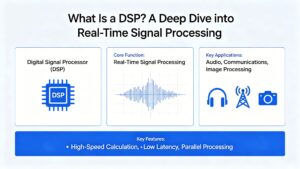
Learn how DSPs (Digital Signal Processors) enable real-time audio, industrial motor control, 5G communications & medical imaging. Compare DSP vs MCU, choose fixed vs floating-point DSPs, and source authentic DSP chips at ChipApex.
View details
Navigate the MPU landscape (NXP, TI, ST) with our guide. Discover ARM Cortex-A architecture, hidden costs of MPUs, longevity risks, and source authentic industrial-grade MPUs with full BOM support at ChipApex.
View details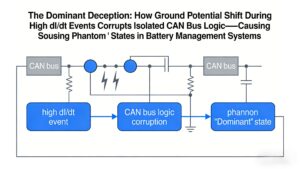
Ground potential shift during high dI/dt regen braking causes isolated CAN receivers to output false dominant states, locking EV BMS networks. Discover robust solutions like TJA1044GT/3Z + common-mode filtering validated by ChipApex.
View details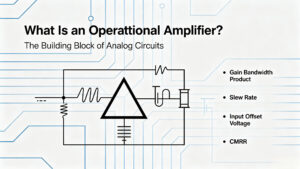
Stop guessing which Op-Amp to use. We break down GBWP, Slew Rate, and Offset Voltage with real engineering insights. Find the right parts like NE5532DR & LM358DR at ChipApex.
View details
The activity of extra discounts on wholesale prices is in full swing…
Please fill in your contact information and we will send you the latest wholesale price list.

