 ChipApex | Global Electronic Components Supplier

SEARCH
Search Product
Search Post
— IC芯片 | 连接器 | 传感器 | 被动器件 —
Search productSearch post
— IC芯片 | 连接器 | 传感器 | 被动器件 —
Consult the customer manager about the wholesale price.
consultation hotline:86-132-6715-2157
email:[email protected]
Contact the product manager for consultation. One-stop consultation is available.
Do you want a lower wholesale price? Please send us your inquiry and we will reply immediately.
The Microchip Technology 2N5415U4 is a single PNP bipolar junction transistor (BJT) designed for surface-mount applications. It features a collector-emitter breakdown voltage of 200 V and a continuous collector current rating of 1 A. The device supports a maximum power dissipation of 1 W and operates within a junction temperature range of -65°C to 200°C. Packaged in the U4 3-SMD, no-lead format, it exhibits a DC current gain (hFE) of at least 30 at 50 mA and 10 V, with a collector cutoff current maximum of 50 µA.
Verify the specific U4 package dimensions against the official datasheet before finalizing PCB footprint designs. Confirm that the required hFE binning meets circuit gain requirements, as specifications are minimums. Ensure thermal management strategies account for the 1 W power dissipation limit at elevated ambient temperatures. Cross-reference the manufacturer's latest product change notifications to verify assembly site and labeling updates.
Select this component when a high-voltage PNP transistor is required in a compact surface-mount form factor. The 200 V rating distinguishes it from lower-voltage alternatives, while the 1 A current capacity supports moderate load switching. Consider the wide operating temperature range for harsh environment deployments. Compare against through-hole variants if board space permits, noting the electrical differences between package types.
This part belongs to Microchip's discrete semiconductor lineup, specifically within the bipolar junction transistor category. It serves as the surface-mount equivalent to legacy through-hole devices like the 2N5415, maintaining similar electrical characteristics while adapting to modern SMD manufacturing processes. The U4 package provides a standardized footprint for automated placement.
The 2N5415 is a through-hole alternative with identical electrical ratings but different physical mounting requirements. Verify pinout compatibility and thermal resistance differences when substituting packages. No other direct surface-mount equivalents are confirmed in the provided documentation.
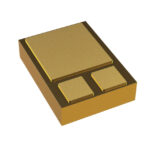 2N5415U4

The activity of extra discounts on wholesale prices is in full swing…
Please fill in your contact information and we will send you the latest wholesale price list.





