 ChipApex | Global Electronic Components Supplier

SEARCH
Search Product
Search Post
— IC芯片 | 连接器 | 传感器 | 被动器件 —
Search productSearch post
— IC芯片 | 连接器 | 传感器 | 被动器件 —
Consult the customer manager about the wholesale price.
consultation hotline:86-132-6715-2157
email:[email protected]
Contact the product manager for consultation. One-stop consultation is available.
Do you want a lower wholesale price? Please send us your inquiry and we will reply immediately.
The 2SD2642 is a silicon NPN triple diffused planar transistor designed for audio, series regulator, and general-purpose applications. It features an absolute maximum collector current of 6 A and a collector-emitter voltage rating of 110 V. The device provides a minimum DC current gain (hFE) of 5000 under specific test conditions and exhibits a typical transition frequency (fT) of 60 MHz. With a power dissipation capacity of 30 W at 25°C case temperature, it serves as the complement to the 2SB1687 PNP type.
Verify component authenticity through official Sanken Electric channels or authorized distributors. Confirm package integrity and marking alignment with FM20 specifications. Review datasheet revision history for updates. Ensure storage conditions comply with moisture sensitivity levels. Validate supplier documentation against original manufacturer standards before integration into production.
Select this component for designs requiring high current gain and moderate voltage handling in audio or linear regulation contexts. Consider thermal management strategies given the 30 W dissipation limit. Evaluate complementary PNP options for balanced circuit performance. Assess switching speed requirements against the 60 MHz transition frequency. Verify pinout compatibility with existing footprint designs.
This NPN transistor belongs to Sanken's discrete semiconductor portfolio, specifically engineered for power amplification tasks. It utilizes triple diffused planar technology to enhance performance stability. The device is positioned as a standard solution for legacy and new audio equipment designs where high beta values are critical for driver stage efficiency.
The 2SB1687 is the designated complementary PNP counterpart. No other direct substitutes are officially confirmed in public documentation. Designers should verify electrical parameter matching when integrating paired components.
The 2SB1687 is the specified complementary PNP transistor for use in push-pull configurations.
The datasheet explicitly states that this component is not recommended for new designs.
The device is housed in an FM20 (TO-220F) plastic package.
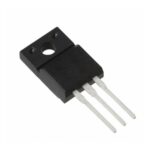 2SD2642

The activity of extra discounts on wholesale prices is in full swing…
Please fill in your contact information and we will send you the latest wholesale price list.





