ChipApex | Global Electronic Components Supplier

SEARCH
Search Product
Search Post
Search productSearch post
Consult the customer manager about the wholesale price.
consultation hotline:86-132-6715-2157
email:[email protected]
Contact the product manager for consultation. One-stop consultation is available.
Do you want a lower wholesale price? Please send us your inquiry and we will reply immediately.
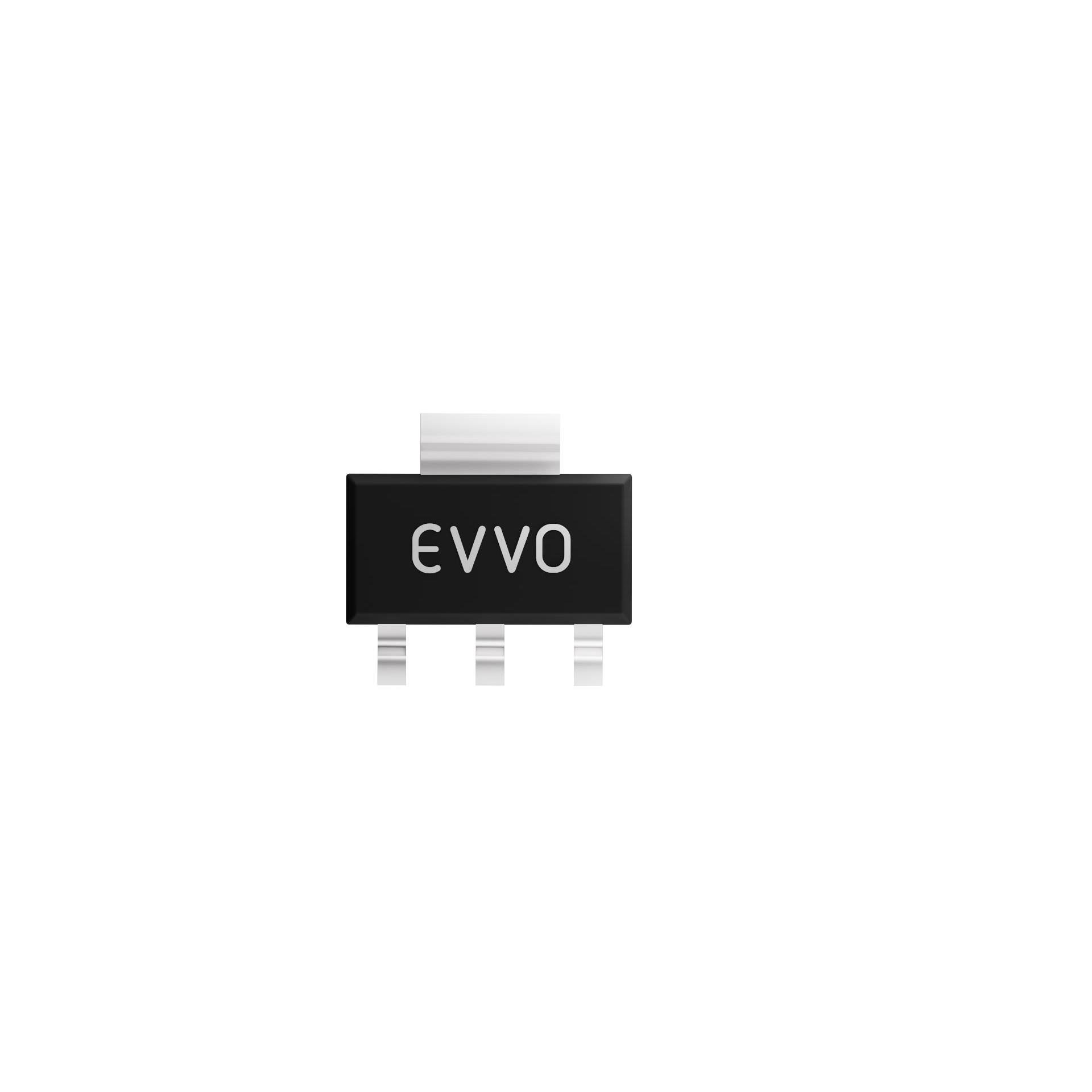
BCP51 is listed in the Single Bipolar Transistors range at ChipApex. The manufacturer field lists EVVO. Its product description is TRANS PNP 45V 1A SOT-223-3L. Review the specifications below when checking this part for your BOM.
The EVVO BCP51 is a PNP silicon power transistor housed in an SOT-223 package. It features a maximum collector-emitter voltage of -45 V and a continuous collector current of 1 A. The device provides a minimum DC current gain (hFE) of 25 at 500 mA and 63 at 150 mA, with a transition frequency of 100 MHz. Designed for high collector current applications, it exhibits low collector-emitter saturation voltage.
Verify the specific part number against the official datasheet to confirm the -45 V rating. Ensure the SOT-223 package matches the design requirements. Confirm RoHS compliance status as indicated in the documentation before finalizing procurement.
Select this component for applications requiring a PNP transistor with 1 A current handling and -45 V breakdown. It serves as the complementary counterpart to the NPN BCP54 series. Consider thermal resistance and heat dissipation capabilities when designing the circuit layout for sustained operation.
The BCP51 belongs to a family of medium-power PNP transistors designed for general-purpose switching and amplification. It is part of a complementary set that includes NPN variants, facilitating balanced push-pull configurations in amplifier circuits and power management designs.
The BCP51 is electrically complementary to the BCP54, BCP55, and BCP56 NPN transistors. Verify pinout compatibility and voltage ratings when substituting with other manufacturers' equivalents.
The maximum collector-emitter voltage (VCEO) for the BCP51 is -45 V.
Yes, the datasheet explicitly lists AF driver and output stages as primary applications due to its high collector current and low saturation voltage.
The transition frequency (fT) is 100 MHz, measured at VCE = -10 V and IC = -50 mA.
Explore related parts through Bipolar (BJT), Transistors, Discrete Semiconductor Products, all product categories.
 BCP51

The activity of extra discounts on wholesale prices is in full swing…
Please fill in your contact information and we will send you the latest wholesale price list.