 ChipApex | Global Electronic Components Supplier
SEARCH
Search Product
Search Post
— IC芯片 | 连接器 | 传感器 | 被动器件 —
Search productSearch post
— IC芯片 | 连接器 | 传感器 | 被动器件 —
Consult the customer manager about the wholesale price.
consultation hotline:86-132-6715-2157
email:[email protected]
Contact the product manager for consultation. One-stop consultation is available.
Do you want a lower wholesale price? Please send us your inquiry and we will reply immediately.
The BF999E6327HTSA1 is a silicon N-channel RF MOSFET transistor from Infineon Technologies, designed for small-signal radio frequency applications. It utilizes an SOT-23 surface-mount package with three pins. The device features a maximum drain-source voltage of 30 V and a continuous drain current of 1.4 A. Key electrical parameters include a gate threshold voltage range of 0.8 V to 1.5 V and a maximum power dissipation of 200 mW. It operates within a temperature range of -55 °C to +150 °C and offers a typical power gain of 27 dB.
Verify component authenticity through authorized distribution channels or direct manufacturer verification. Confirm RoHS compliance status via official documentation before integration. Check for End-of-Life notifications as discontinuation may affect long-term supply chain stability. Ensure storage conditions meet moisture sensitivity level requirements to prevent package damage during soldering processes.
Select this component for applications requiring high power gain in a compact form factor. Evaluate the 30 V drain-source voltage limit against circuit peak voltages. Consider the 200 mW power dissipation capability for thermal management design. Compare the SOT-23 footprint against available board space constraints. Verify compatibility with required operating frequencies for RF performance.
This part belongs to the BF999 series of RF MOSFET transistors manufactured by Infineon Technologies. It is specifically engineered for silicon-based radio frequency applications. The suffix E6327 indicates specific manufacturing and packaging details defined by the supplier. It serves as a discrete solution for RF signal processing tasks where integrated circuits may not provide sufficient flexibility or gain characteristics.
Official substitute part numbers are not explicitly listed in the provided documentation. Engineers should evaluate alternative N-channel RF MOSFETs with similar SOT-23 packaging, comparable Vds ratings, and equivalent power gain specifications. Cross-compatibility requires careful verification of pinout configurations and thermal resistance values.


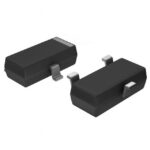 BF999E6327HTSA1
The activity of extra discounts on wholesale prices is in full swing…
Please fill in your contact information and we will send you the latest wholesale price list.



