ChipApex | Global Electronic Components Supplier
SEARCH
Search Product
Search Post
— IC芯片 | 连接器 | 传感器 | 被动器件 —
Search productSearch post
— IC芯片 | 连接器 | 传感器 | 被动器件 —
Consult the customer manager about the wholesale price.
consultation hotline:86-132-6715-2157
email:[email protected]
Contact the product manager for consultation. One-stop consultation is available.
Do you want a lower wholesale price? Please send us your inquiry and we will reply immediately.
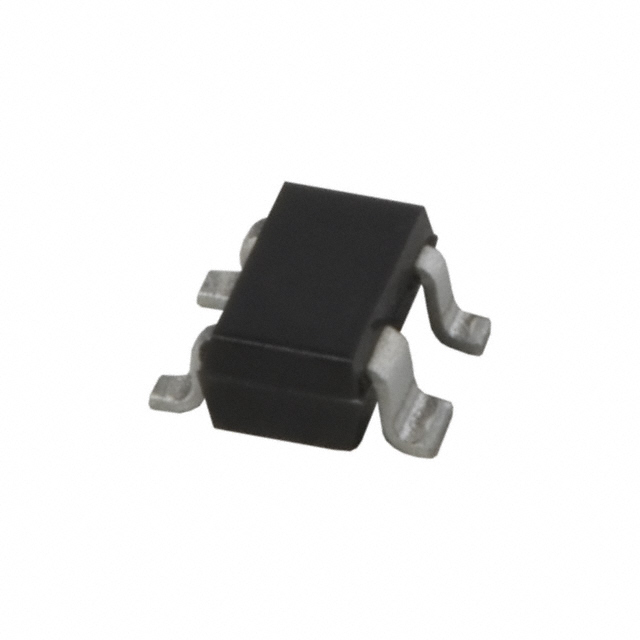
The BFG10W/X,115 is a high-performance NPN silicon RF power transistor designed for broadband applications in the VHF and UHF frequency ranges. It utilizes a ruggedized construction to withstand high voltage standing wave ratio (VSWR) conditions without degradation. The device features a hermetically sealed ceramic package that provides excellent thermal conductivity and mechanical stability. Key electrical characteristics include a maximum collector-emitter voltage of 30V and a maximum collector current of 2A. It is optimized for linear amplification with high gain and low noise figure, making it suitable for demanding RF signal processing tasks.
Verify the specific suffix /115 indicates the tape and reel packaging configuration as per the manufacturer's standard. Confirm the date code and lot traceability requirements against your quality management system standards before finalizing orders. Ensure compatibility with the specified thermal interface materials for optimal heat dissipation performance.
Select this component when broadband coverage from VHF to UHF is required alongside robust load immunity. Evaluate the thermal resistance parameters against your heatsink design to ensure junction temperature limits are not exceeded under continuous wave operation. Compare gain flatness specifications against alternative transistors if strict amplitude consistency is critical for the application bandwidth.
This part belongs to NXP's BFG series of silicon RF power transistors, known for their reliability in analog RF circuits. The BFG10W specifically targets applications needing high linearity and power handling in a compact form factor. It serves as a foundational active component in amplifier stages where wideband performance is prioritized over narrowband efficiency.
Direct pin-compatible replacements may be limited due to specific gain and breakdown voltage combinations. Review datasheets for alternative NPN RF transistors with similar S-parameter profiles and thermal footprints. Verify that any substitute meets the same VSWR tolerance and hermetic sealing requirements if used in harsh environments.
 BFG10W/X,115
The activity of extra discounts on wholesale prices is in full swing…
Please fill in your contact information and we will send you the latest wholesale price list.