 ChipApex | Global Electronic Components Supplier
SEARCH
Search Product
Search Post
— IC芯片 | 连接器 | 传感器 | 被动器件 —
Search productSearch post
— IC芯片 | 连接器 | 传感器 | 被动器件 —
Consult the customer manager about the wholesale price.
consultation hotline:86-132-6715-2157
email:[email protected]
Contact the product manager for consultation. One-stop consultation is available.
Do you want a lower wholesale price? Please send us your inquiry and we will reply immediately.
The BLC8G27LS-160AV is a 160 W LDMOS asymmetrical Doherty power transistor designed for base station applications in the 2496 MHz to 2690 MHz frequency range. It features an air cavity plastic earless flanged package (SOT1275-1) with six leads, including separate main and peak device connections. The component operates at a drain-source voltage of 65 V maximum and achieves typical drain efficiency up to 64% under pulsed conditions. It exhibits excellent ruggedness, supporting a VSWR of 10:1 through all phases, and provides approximately 130 MHz video bandwidth for improved performance in complex modulation environments.
Verify the specific ordering suffix against the manufacturer's current documentation to confirm package version and compliance status. Ensure that the procurement channel sources directly from authorized distributors or the manufacturer to guarantee authenticity. Confirm RoHS directive compliance requirements prior to finalizing orders, as specifications may be subject to revision.
Select this component for designs requiring high efficiency and linearity in asymmetrical Doherty configurations. Verify that the application environment supports the specified junction temperature limits and thermal management requirements. Ensure the input and output impedance matching networks align with the provided load-pull data for optimal power gain and efficiency performance.
This part belongs to Ampleon's portfolio of RF power transistors engineered for telecommunications infrastructure. It utilizes Laterally Diffused Metal-Oxide Semiconductor technology optimized for high-frequency operation. The device is specifically tailored for modern cellular base station architectures demanding robust performance under high peak-to-average power ratio signals.
Consult official Ampleon substitution guides for verified equivalent models. Do not assume functional compatibility with other LDMOS devices without validating pinout, thermal characteristics, and impedance parameters against the target design requirements.

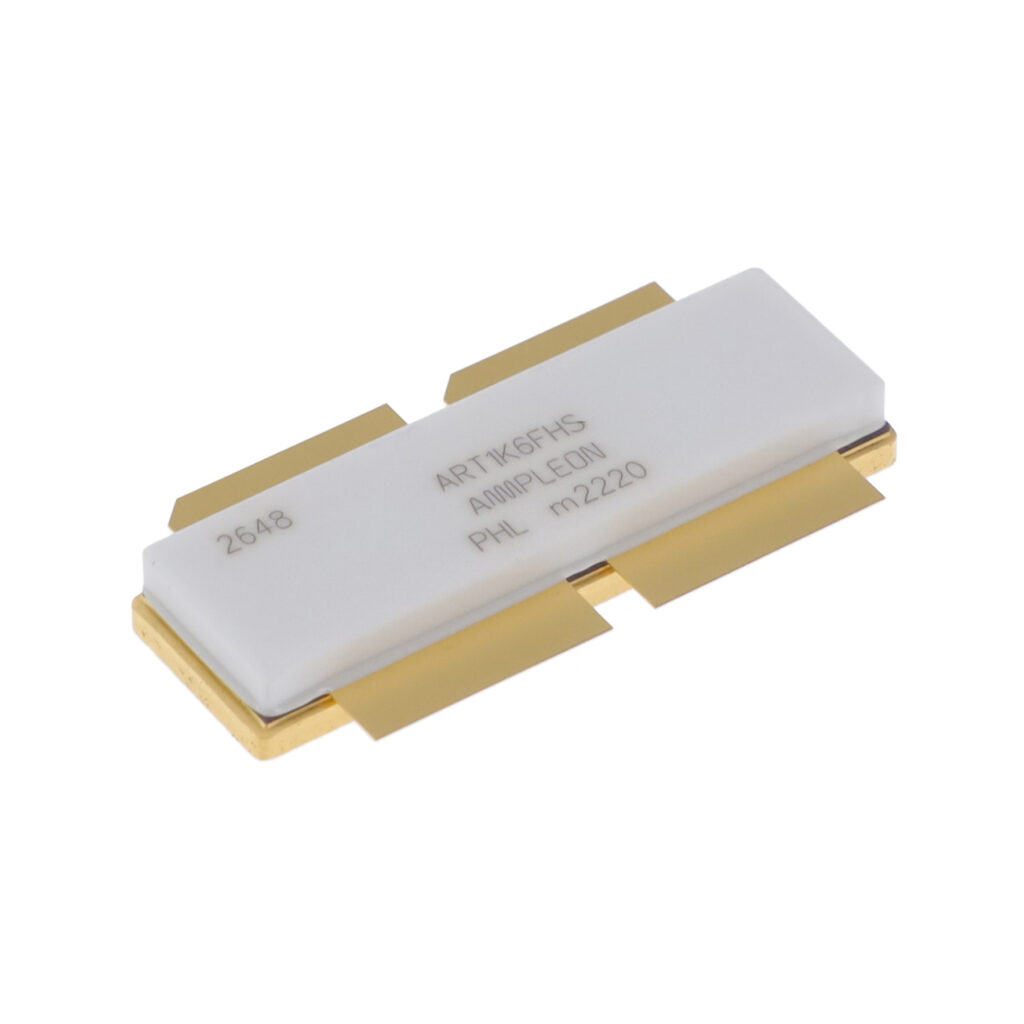
 BLC8G27LS-160AVU
The activity of extra discounts on wholesale prices is in full swing…
Please fill in your contact information and we will send you the latest wholesale price list.



