ChipApex | Global Electronic Components Supplier
SEARCH
Search Product
Search Post
— IC芯片 | 连接器 | 传感器 | 被动器件 —
Search productSearch post
— IC芯片 | 连接器 | 传感器 | 被动器件 —
Consult the customer manager about the wholesale price.
consultation hotline:86-132-6715-2157
email:[email protected]
Contact the product manager for consultation. One-stop consultation is available.
Do you want a lower wholesale price? Please send us your inquiry and we will reply immediately.
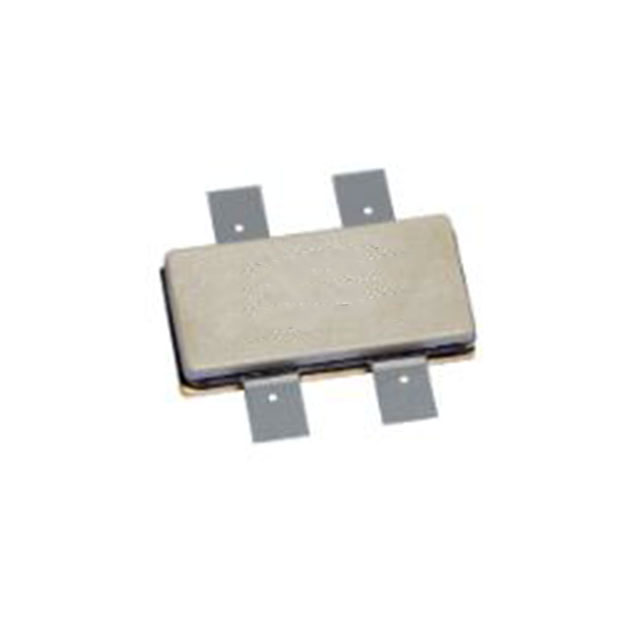
The BLC9H10XS-350A is a dual N-channel LDMOS power transistor designed for asymmetric Doherty base station applications in the 617 MHz to 960 MHz range. It features an air cavity plastic earless flanged package (SOT1273-1) with four leads. The device provides 350 W output power at 1 dB gain compression and achieves up to 54% drain efficiency under 1-carrier W-CDMA test conditions. Key electrical parameters include a drain-source breakdown voltage of 108 V, a gate-source threshold voltage of 2.0 V typical, and a thermal resistance from junction to case of 0.4 K/W. It operates within a case temperature range of -40 °C to +125 °C.
Verify the specific ordering suffix against the manufacturer's current catalog to ensure correct packaging and tape-and-reel specifications. Confirm that the component meets RoHS compliance requirements as defined in the product details on the official Ampleon website before finalizing procurement orders.
Select this component for asymmetric Doherty architectures requiring high linearity and efficiency in UHF bands. Ensure the design accommodates the SOT1273-1 package dimensions and utilizes the recommended impedance values provided in the datasheet for both main and peak devices to achieve optimal performance.
This part belongs to the BLC9H10XS series of power LDMOS transistors manufactured by Ampleon. These components are engineered for high-power RF applications, specifically targeting the demanding requirements of modern cellular base station infrastructure operating across multiple frequency bands.
Consult the official Ampleon documentation for verified substitute part numbers. Do not assume functional equivalence with other models without validating pinout compatibility and electrical characteristics against the specific application requirements.
The absolute maximum drain-source voltage (VDS) rating is 105 V.
The device includes integrated ESD protection and is classified as C3 under the Charged Device Model and Class 2 under the Human Body Model.
The thermal resistance (Rth(j-c)) is typically 0.4 K/W under standard test conditions.
 BLC9H10XS-350AY
The activity of extra discounts on wholesale prices is in full swing…
Please fill in your contact information and we will send you the latest wholesale price list.