ChipApex | Global Electronic Components Supplier
SEARCH
Search Product
Search Post
— IC芯片 | 连接器 | 传感器 | 被动器件 —
Search productSearch post
— IC芯片 | 连接器 | 传感器 | 被动器件 —
Consult the customer manager about the wholesale price.
consultation hotline:86-132-6715-2157
email:[email protected]
Contact the product manager for consultation. One-stop consultation is available.
Do you want a lower wholesale price? Please send us your inquiry and we will reply immediately.
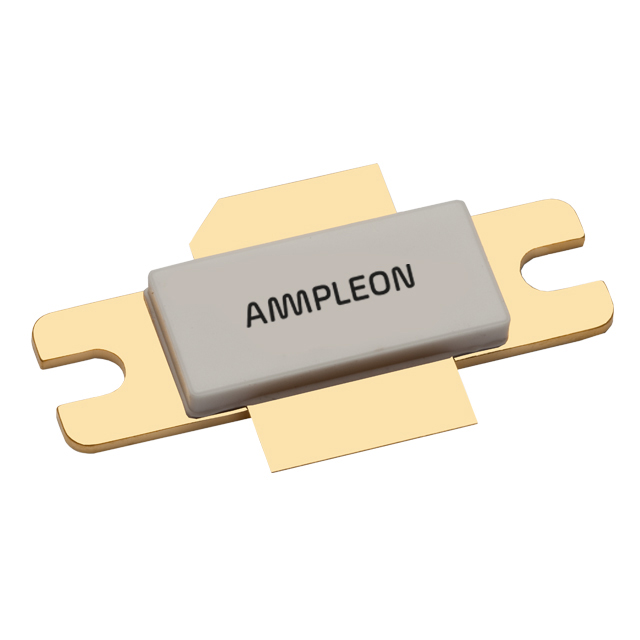
The BLF1820-90,112 is a UHF power LDMOS transistor designed for broadband operation in the 1800 to 2000 MHz frequency range. It delivers 90 W PEP output power with a typical gain of 12 dB and efficiency of 32% at a supply voltage of 26 V and IDQ of 500 mA. The device features internal matching for ease of use, excellent ruggedness capable of withstanding a VSWR of 10:1, and high thermal stability. It utilizes an SOT502A flanged ceramic package with a junction-to-heatsink thermal resistance of 0.81 K/W.
Verify the current product status as the datasheet indicates a 2003 publication date from Philips Semiconductors. Confirm availability through authorized NXP distributors, as this component may be superseded or discontinued. Ensure anti-static handling protocols are followed during transport and assembly due to ESD sensitivity.
Select this component for UHF broadband applications requiring high linearity and power density. Consider the SOT502A package constraints and the need for adequate heatsinking given the 0.81 K/W thermal resistance. Evaluate biasing requirements carefully to maintain optimal efficiency and intermodulation distortion performance within the specified operating temperature range.
This device belongs to the family of UHF power LDMOS transistors intended for base station infrastructure. It represents a solution for high-efficiency RF amplification in cellular communication bands. The technology leverages LDMOS characteristics to provide robust performance in demanding linear amplifier environments.
Consult official documentation for direct substitutes. Potential alternatives include other NXP UHF LDMOS transistors such as the BLF188 series or similar broadband devices, provided they meet the specific electrical and mechanical requirements of the design.
The absolute maximum drain-source voltage (VDS) is rated at 65 V.
It can withstand a load mismatch corresponding to a VSWR of 10:1 through all phases under specified class-AB operating conditions.
The source is connected to the flange, requiring a heatsink with a thermal resistance of 0.81 K/W from junction to heatsink to maintain safe operating temperatures.


 BLF1820-90,112
The activity of extra discounts on wholesale prices is in full swing…
Please fill in your contact information and we will send you the latest wholesale price list.