ChipApex | Global Electronic Components Supplier
SEARCH
Search Product
Search Post
— IC芯片 | 连接器 | 传感器 | 被动器件 —
Search productSearch post
— IC芯片 | 连接器 | 传感器 | 被动器件 —
Consult the customer manager about the wholesale price.
consultation hotline:86-132-6715-2157
email:[email protected]
Contact the product manager for consultation. One-stop consultation is available.
Do you want a lower wholesale price? Please send us your inquiry and we will reply immediately.
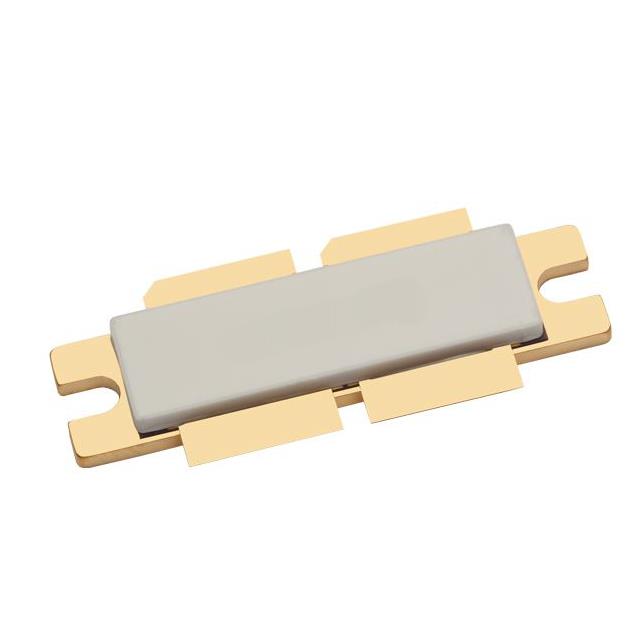
The BLF6G20-230PRN is a 230 W LDMOS power transistor designed for base station applications operating between 1800 MHz and 2000 MHz. It features an internally matched balanced ceramic package (SOT539A) with two mounting holes and four leads. The device supports a drain-source voltage of 65 V, a junction temperature up to 225 °C, and a thermal resistance from junction to case of 0.38 K/W at 65 W average output power. Typical performance in a 2-carrier W-CDMA configuration includes 65 W average output power, 17.5 dB power gain, 32% drain efficiency, and -31 dBc adjacent channel power ratio.
Verify the specific ordering suffix against official Ampleon documentation to ensure correct package variant selection. Confirm RoHS compliance status as required by local regulations. Ensure proper electrostatic discharge handling protocols are followed during transport and assembly due to inherent device sensitivity.
Select this component for broadband RF power amplifier designs requiring high linearity and efficiency within the 1800 MHz to 2000 MHz band. Evaluate thermal management requirements carefully, as the device operates effectively up to a maximum junction temperature of 225 °C. Verify that the application circuit can support the specified 28 V supply voltage and appropriate biasing conditions.
This part belongs to the BLF6G20(S)-230PRN series manufactured by Ampleon. The 'BLF6G20-230PRN' designation specifically refers to the flanged balanced LDMOST ceramic package version (SOT539A), which includes two mounting holes. A related variant, the BLF6G20S-230PRN, utilizes an earless flanged package (SOT539B). Both share identical electrical characteristics.
The BLF6G20S-230PRN serves as a direct functional substitute with identical electrical specifications but utilizes the SOT539B earless flanged package instead of the SOT539A. Designers must verify mechanical footprint compatibility when swapping between these package variants.
The maximum junction temperature (Tj) rating is 225 °C.
Yes, the device is internally matched to facilitate easier integration into RF circuits.
The typical drain efficiency is 32% under standard test conditions with 65 W average output power.


 BLF6G20-230PRN,112
The activity of extra discounts on wholesale prices is in full swing…
Please fill in your contact information and we will send you the latest wholesale price list.