ChipApex | Global Electronic Components Supplier
SEARCH
Search Product
Search Post
— IC芯片 | 连接器 | 传感器 | 被动器件 —
Search productSearch post
— IC芯片 | 连接器 | 传感器 | 被动器件 —
Consult the customer manager about the wholesale price.
consultation hotline:86-132-6715-2157
email:[email protected]
Contact the product manager for consultation. One-stop consultation is available.
Do you want a lower wholesale price? Please send us your inquiry and we will reply immediately.
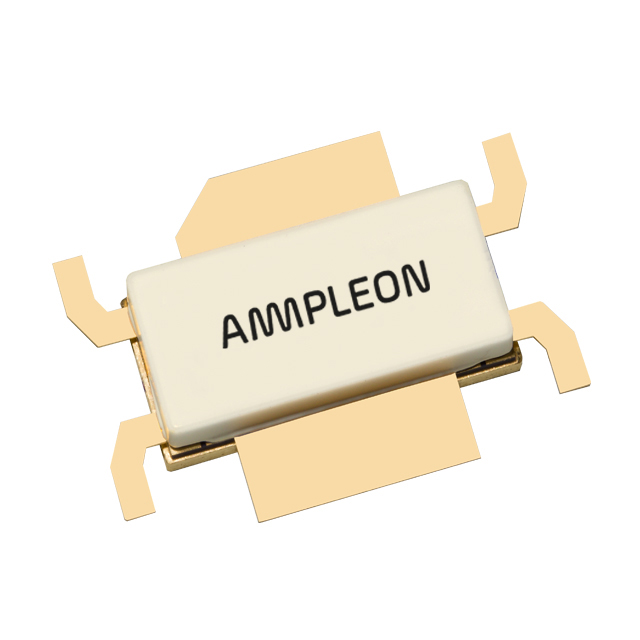
The BLF8G22LS-160BV is a 160 W LDMOS power transistor designed for base station applications in the 2000 MHz to 2200 MHz frequency range. It features improved video bandwidth and low memory effects, making it suitable for multi-carrier systems. The device operates with a drain-source voltage of 32 V and a quiescent current of 1300 mA. In a typical 2-carrier W-CDMA test circuit at 2110 MHz to 2170 MHz, it delivers an average output power of 55 W with a gain of 18.0 dB and a drain efficiency of 32%. The component utilizes an earless flanged SOT1120B ceramic package.
Verify the specific ordering suffix against official Ampleon documentation to confirm exact packaging and handling specifications. Ensure that the procurement channel provides valid traceability for this RF power component. Confirm RoHS compliance status through the manufacturer's latest product data sheet before finalizing acquisition.
Select this component for designs requiring high ruggedness and low thermal resistance in the 2.1 GHz band. Verify that the application supports the specified 32 V operating voltage and 1300 mA quiescent current. Ensure the system can accommodate the SOT1120B earless flanged package dimensions and mounting requirements.
This part belongs to the BLF8G22LS series of power LDMOS transistors manufactured by Ampleon USA Inc. The series is engineered for robust operation in demanding wireless infrastructure environments. The BLF8G22LS-160BV specifically targets the 2000 MHz to 2200 MHz spectrum with optimized linearity and efficiency characteristics.
Consult the official Ampleon datasheet for confirmed substitute part numbers. Do not assume functional equivalence with other models without verifying pinout, electrical parameters, and thermal characteristics against the original specification.
The device exhibits a typical video bandwidth of 100 MHz in a class-AB test circuit within the 2.1 GHz band at 32 V and 1.3 A.
No, unless explicitly stated otherwise in the data sheet, this product is not automotive qualified and should not be used in automotive equipment or applications.
The maximum junction temperature is 200 °C, although constant exposure to maximum temperatures will affect the Mean Time To Failure (MTTF).
 BLF8G22LS-160BV,11
The activity of extra discounts on wholesale prices is in full swing…
Please fill in your contact information and we will send you the latest wholesale price list.