 ChipApex | Global Electronic Components Supplier

SEARCH
Search Product
Search Post
— IC芯片 | 连接器 | 传感器 | 被动器件 —
Search productSearch post
— IC芯片 | 连接器 | 传感器 | 被动器件 —
Consult the customer manager about the wholesale price.
consultation hotline:86-132-6715-2157
email:[email protected]
Contact the product manager for consultation. One-stop consultation is available.
Do you want a lower wholesale price? Please send us your inquiry and we will reply immediately.
The DMN6066SSS-13 is a dual N-channel enhancement mode MOSFET manufactured by Diodes Incorporated. It features a maximum drain-source voltage of 60V and a continuous drain current of 5.0A at 25°C, reducing to 3.7A under derating conditions. The device exhibits a low on-resistance of 48mΩ at VGS=10V and 97mΩ at VGS=4.5V. Packaged in an SO-8 surface-mount case, it operates within a temperature range of -55°C to +150°C with a power dissipation of 1.56W.
Verify the specific ordering suffix when purchasing. The standard commercial version uses the suffix -13, while the automotive qualified version uses -Q-13. Both variants share identical electrical and thermal characteristics but differ in qualification standards. Confirm package type and compliance requirements against project specifications before finalizing orders.
Select this component for circuits requiring a 60V N-channel MOSFET in an SO-8 package. Ensure gate drive voltages align with the specified RDS(on) thresholds of 10V or 4.5V. Consider the thermal derating curve for ambient temperatures exceeding 25°C. Verify that the application does not involve life support systems without explicit manufacturer approval.
This part belongs to the DMN60 series of N-channel enhancement mode MOSFETs from Diodes Incorporated. It utilizes silicon technology and is housed in a molded plastic SO-8 case with tin-finished annealed copper leadframes. The device is designed to balance low conduction losses with fast switching speeds for efficient power conversion.
The DMN6066SSSQ-13 serves as the automotive-grade equivalent with identical electrical and thermal specifications. Verify pinout compatibility and package dimensions (SO-8) when substituting. No other direct substitutes are confirmed in the provided documentation.
The DMN6066SSSQ-13 is the automotive-grade variant qualified to AEC-Q101 standards and is PPAP capable. The DMN6066SSS-13 is the commercial grade. Electrically and thermally, they are identical.
No. Diodes Incorporated products are specifically not authorized for use as critical components in life support devices or systems without express written approval from the Chief Executive Officer.
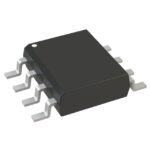 DMN6066SSS-13

The activity of extra discounts on wholesale prices is in full swing…
Please fill in your contact information and we will send you the latest wholesale price list.





