 ChipApex | Global Electronic Components Supplier

SEARCH
Search Product
Search Post
— IC芯片 | 连接器 | 传感器 | 被动器件 —
Search productSearch post
— IC芯片 | 连接器 | 传感器 | 被动器件 —
Consult the customer manager about the wholesale price.
consultation hotline:86-132-6715-2157
email:[email protected]
Contact the product manager for consultation. One-stop consultation is available.
Do you want a lower wholesale price? Please send us your inquiry and we will reply immediately.
The IXBT42N170A is a single N-channel IGBT from the IXYS BIMOSFET series, utilizing silicon technology. It features a D3PAK-3 (TO-268-3) surface-mount package designed for screw mount installation. The device supports a maximum collector-emitter voltage of 1.7 kV and a continuous collector current of 75 A at 25°C. Key electrical parameters include a saturation voltage of 2.8 V, a gate-emitter voltage range of -20 V to +20 V, and a power dissipation capacity of 360 W. It operates within a temperature range of -55°C to +150°C.
Verify the specific suffix 'A' against the manufacturer's official datasheet to confirm exact electrical tolerances and pinout configurations. Ensure the ordering documentation explicitly references the IXBT42N170A part number to distinguish it from similar variants like the standard IXBT42N170. Confirm RoHS compliance status through the latest environmental declaration provided by IXYS or Littelfuse before finalizing procurement contracts.
Select this component when a high-voltage, high-current single switch is required in a surface-mount form factor. The 1.7 kV rating makes it appropriate for medium-voltage AC/DC conversion stages. Compare the 2.8 V saturation voltage against system efficiency targets. Ensure the PCB layout accommodates the D3PAK-3 footprint and provides adequate thermal relief for the 360 W dissipation rating under expected operating conditions.
This device belongs to the IXYS BIMOSFET family, which integrates a MOS gate driver with an IGBT output stage on a single die. This architecture simplifies drive circuitry requirements compared to discrete solutions. The IXBT42N170A specifically addresses the need for robust, high-power switching in industrial environments where reliability and compact mounting are critical design constraints.
Publicly confirmed substitute part numbers are not available in the provided source material. Verify compatibility with existing drive circuits if considering alternative manufacturers. Check for pin-to-pin equivalence and matching thermal resistance values before substituting.
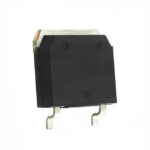 IXBT42N170A

The activity of extra discounts on wholesale prices is in full swing…
Please fill in your contact information and we will send you the latest wholesale price list.





