 ChipApex | Global Electronic Components Supplier
SEARCH
Search Product
Search Post
— IC芯片 | 连接器 | 传感器 | 被动器件 —
Search productSearch post
— IC芯片 | 连接器 | 传感器 | 被动器件 —
Consult the customer manager about the wholesale price.
consultation hotline:86-132-6715-2157
email:[email protected]
Contact the product manager for consultation. One-stop consultation is available.
Do you want a lower wholesale price? Please send us your inquiry and we will reply immediately.
The IXYH40N65C3 is a single N-channel Insulated Gate Bipolar Transistor (IGBT) manufactured by IXYS, utilizing Silicon technology and XPT GenX3 architecture. It is housed in a TO-247AD-3 through-hole package. The device supports a maximum collector-emitter voltage of 650 V and delivers a continuous collector current of 80 A at 25°C. Key electrical characteristics include a collector-emitter saturation voltage of 1.85 V, a gate-emitter leakage current of 100 nA, and a power dissipation rating of 300 W. It operates within a temperature range of -55°C to +175°C junction temperature.
Verify the specific ordering suffix and revision level against the manufacturer's latest datasheet to ensure compatibility with required thermal and electrical specifications. Confirm RoHS compliance status and REACH registration details prior to integration into regulated supply chains. Cross-reference the component marking code with official identification guides to prevent counterfeit substitution during sourcing.
Select this component when a robust single IGBT with moderate current handling is required for hard-switching applications. The TO-247AD-3 package facilitates efficient heat sinking compared to smaller form factors. Ensure the gate drive circuit accommodates the specified 20 V maximum gate-emitter voltage limits and matches the input capacitance requirements for the target switching frequency.
This part belongs to the IXYS IXYH40N65 series, which groups silicon IGBTs rated for 650 V blocking voltage. The series utilizes common GenX3 platform technologies across various current ratings. The IXYH40N65C3 specifically targets the 40A/80A current bracket within this family, sharing pinout and mechanical dimensions with adjacent models for design flexibility.
Direct pin-compatible substitutes within the same IXYS portfolio include the IXYH30N65C3 for lower current needs or the IXYH60N65C3 for higher capacity. External cross-manufacturer replacements require careful verification of Vce(sat), RthJC, and switching energy parameters to maintain system thermal and electrical integrity.
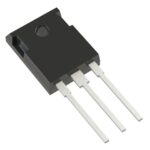 IXYH40N65C3
The activity of extra discounts on wholesale prices is in full swing…
Please fill in your contact information and we will send you the latest wholesale price list.





