 ChipApex | Global Electronic Components Supplier
SEARCH
Search Product
Search Post
— IC芯片 | 连接器 | 传感器 | 被动器件 —
Search productSearch post
— IC芯片 | 连接器 | 传感器 | 被动器件 —
Consult the customer manager about the wholesale price.
consultation hotline:86-132-6715-2157
email:[email protected]
Contact the product manager for consultation. One-stop consultation is available.
Do you want a lower wholesale price? Please send us your inquiry and we will reply immediately.
The MA2SV0200L is a silicon epitaxial planar variable capacitance diode designed for Voltage Controlled Oscillator (VCO) applications. It features good linearity and a large capacitance ratio in the C_D versus V_R relationship, alongside small series resistance. The device operates within a reverse voltage rating of 6V and a junction temperature up to 150°C. Key electrical characteristics include a typical diode capacitance of 20.0 pF at 1V reverse bias and 9.0 pF at 4V reverse bias, both measured at 1 MHz. The capacitance ratio typically ranges from 2.1 to 2.6. Series resistance is specified as 0.3 Ω at 470 MHz under 4V reverse bias.
Verify component status before procurement as this item may be classified under maintenance or discontinued lifecycle stages. Consult official manufacturer channels for current availability and latest product standards. Ensure compliance with RoHS directives and confirm that the specific batch meets required quality levels for intended standard applications.
Select this component when designing circuits requiring precise capacitance tuning with minimal series resistance at RF frequencies. Verify that the operating environment remains within the -55°C to +150°C storage range and that reverse voltages do not exceed the 6V absolute maximum rating. Consider the SC-79 footprint compatibility during PCB layout.
This part belongs to the MA2SV02 series of silicon epitaxial planar variable capacitance diodes manufactured by Panasonic Electronic Components. It is specifically engineered for general-purpose electronic equipment and communications gear, offering a compact surface-mount solution for frequency control applications.
Publicly confirmed substitute part numbers are not available in the provided documentation. Users should consult official manufacturer resources for potential cross-references or updated model equivalents.
The typical capacitance ratio (C_D(1V) / C_D(4V)) ranges from 2.1 to 2.6.
The absolute maximum reverse voltage rating is 6V.
The series resistance is measured at a frequency of 470 MHz.
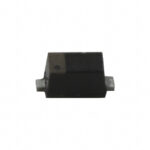 MA2SV0200L
The activity of extra discounts on wholesale prices is in full swing…
Please fill in your contact information and we will send you the latest wholesale price list.





