 ChipApex | Global Electronic Components Supplier
SEARCH
Search Product
Search Post
— IC芯片 | 连接器 | 传感器 | 被动器件 —
Search productSearch post
— IC芯片 | 连接器 | 传感器 | 被动器件 —
Consult the customer manager about the wholesale price.
consultation hotline:86-132-6715-2157
email:[email protected]
Contact the product manager for consultation. One-stop consultation is available.
Do you want a lower wholesale price? Please send us your inquiry and we will reply immediately.
The MMBFJ309LT1G is an N-channel Junction Field-Effect Transistor (JFET) manufactured by onsemi. It is housed in a surface-mount SOT-23-3 package and utilizes silicon technology. The device features a drain-source breakdown voltage of 25 V and a gate-source breakdown voltage of 25 V. The zero-gate-voltage drain current ranges from 12 mA to 30 mA, with a maximum value of 30 mA. The gate-source cutoff voltage has a maximum rating of -4 V. It supports a maximum power dissipation of 225 mW and operates at temperatures up to 150 °C. The component is AEC-Q101 qualified and RoHS compliant.
Verify the specific ordering suffix against official manufacturer documentation to ensure correct packaging and tape-and-reel specifications. Confirm that the delivered components match the exact part number MMBFJ309LT1G to avoid substitution errors. Check compliance certificates such as RoHS and REACH status directly from the supplier's declaration documents prior to integration into production lines.
Select this component when an N-channel JFET with a 25 V breakdown voltage and low input capacitance is required for RF circuits. The SOT-23 package suits space-constrained designs. Ensure the application demands a drain current within the 12 mA to 30 mA range at zero gate bias. Verify thermal management capabilities for the 225 mW power dissipation limit in the intended operating environment.
This component belongs to the MMBFJ309L series of small-signal JFETs. It is categorized under discrete semiconductors and transistors within the onsemi portfolio. The device is designed for ultra-high frequency band operations, distinguishing it from general-purpose switching transistors. It shares the SOT-23 form factor with other small-signal devices but offers specific JFET characteristics for analog signal handling.
MMBFJ108 is a documented alternative from the same manufacturer. Designers must verify that the substitute's electrical parameters, particularly the gate-source cutoff voltage and drain current, align with the original circuit requirements before implementation.

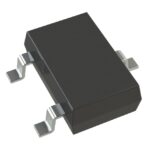 MMBFJ309LT1G
The activity of extra discounts on wholesale prices is in full swing…
Please fill in your contact information and we will send you the latest wholesale price list.




