 ChipApex | Global Electronic Components Supplier
SEARCH
Search Product
Search Post
— IC芯片 | 连接器 | 传感器 | 被动器件 —
Search productSearch post
— IC芯片 | 连接器 | 传感器 | 被动器件 —
Consult the customer manager about the wholesale price.
consultation hotline:86-132-6715-2157
email:[email protected]
Contact the product manager for consultation. One-stop consultation is available.
Do you want a lower wholesale price? Please send us your inquiry and we will reply immediately.
The MPF102_D27Z is an N-channel RF amplifier and analog switch manufactured by onsemi (formerly Fairchild Semiconductor). It operates within a drain-gate voltage of 25 V and a gate-source voltage of -25 V. The device features a zero-gate voltage drain current ranging from 2.0 to 20 mA and a forward transconductance between 2000 and 7500 μS at 1 kHz. Thermal dissipation reaches 350 mW with a junction-to-ambient resistance of 357 °C/W. Input capacitance is typically 7.0 pF, while reverse transfer capacitance is 3.0 pF at 1 MHz. The component utilizes a TO-92G package and supports operating temperatures from -55 to +155 °C.
Verify the manufacturer designation carefully, as the datasheet indicates Fairchild Semiconductor origin while the model prefix suggests onsemi lineage. Confirm the specific ordering suffix matches the required lead-free status and package variant. Ensure the procurement channel provides valid traceability documentation for this discontinued or legacy component series.
Select this component when designing circuits that require an N-channel enhancement mode MOSFET for RF amplification or analog signal routing. Evaluate the thermal constraints against the specified junction-to-ambient resistance if operating near maximum power dissipation limits. Consider the gate-source cutoff voltage characteristics for appropriate logic level interfacing in switching applications.
This part belongs to the MPF102 family of N-channel RF amplifiers originally developed by Fairchild Semiconductor. The D27Z suffix typically denotes specific packaging and environmental compliance attributes. As a legacy silicon-based MOSFET, it serves foundational roles in older RF designs and general-purpose analog switching systems where high-frequency performance is secondary to robust switching characteristics.
Consult official cross-reference lists for direct pin-compatible alternatives. Verify that substitute devices maintain equivalent gate-source breakdown voltages and transconductance ranges to ensure circuit stability without redesigning bias networks.



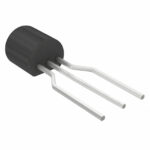 MPF102_D27Z
The activity of extra discounts on wholesale prices is in full swing…
Please fill in your contact information and we will send you the latest wholesale price list.



