ChipApex | Global Electronic Components Supplier
SEARCH
Search Product
Search Post
— IC芯片 | 连接器 | 传感器 | 被动器件 —
Search productSearch post
— IC芯片 | 连接器 | 传感器 | 被动器件 —
Consult the customer manager about the wholesale price.
consultation hotline:86-132-6715-2157
email:[email protected]
Contact the product manager for consultation. One-stop consultation is available.
Do you want a lower wholesale price? Please send us your inquiry and we will reply immediately.
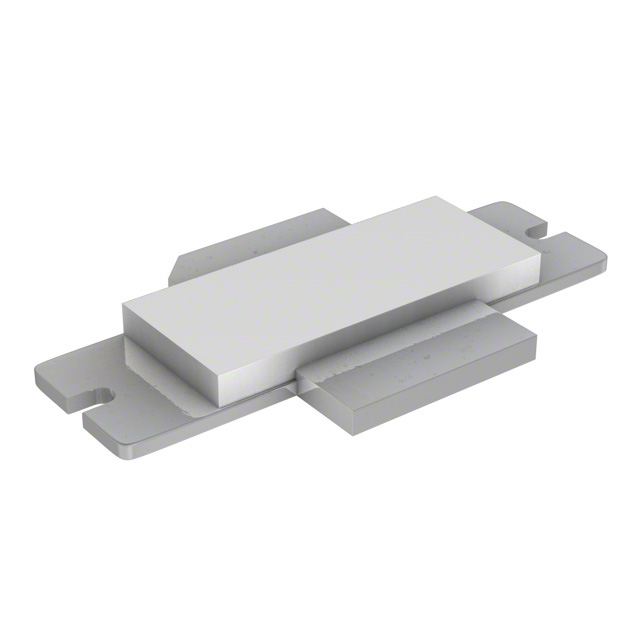
The PTFA191001EV4XWSA1 is a thermally-enhanced, internally-matched LDMOS FET designed for WCDMA, IS-95, and CDMA2000 applications. It operates from 1930 to 1990 MHz with a drain-source breakdown voltage of 65 V and an on-state resistance of 0.08 Ω. The device delivers 100 W output power at P–1dB (130 W typical) with 56% efficiency under CW conditions. It features integrated ESD protection meeting Human Body Model Class 2 standards and excellent thermal stability.
Verify component authenticity through authorized Infineon distributors or certified suppliers. Confirm package type matches requirements: H-36248-2 for slotted flange or H-37248-2 for earless flange. Ensure handling precautions are followed due to ESD sensitivity. Check datasheet revision history for any updates to electrical characteristics or mechanical dimensions before finalizing designs.
Select based on required output power and frequency band coverage within 1930–1990 MHz. Consider thermal management capabilities provided by the specific package variant. Evaluate gain and efficiency requirements against typical performance curves at 30 V supply. Ensure compatibility with reference circuit impedance values provided in the datasheet for optimal broadband performance.
This component belongs to Infineon's Thermally-Enhanced High Power RF LDMOS FET family. It is specifically engineered for cellular infrastructure applications requiring high linearity and power density. The V4 suffix indicates updated package technologies compared to earlier revisions, offering improved thermal performance and reliability for demanding RF environments.
PTFA191001FV4XWSA1 serves as a direct functional substitute with identical electrical characteristics but utilizes the H-37248-2 earless flange package instead of the H-36248-2 slotted flange. Verify mechanical mounting constraints when selecting between these variants.
The maximum junction temperature (TJ) is rated at 200 °C.
No, the PTFA191001E/F features broadband internal matching, eliminating the need for external input/output matching networks.
The typical drain efficiency is 27.5% under two-carrier WCDMA conditions at 1960 MHz with 30 V supply.
 PTFA191001EV4XWSA1
The activity of extra discounts on wholesale prices is in full swing…
Please fill in your contact information and we will send you the latest wholesale price list.