ChipApex | Global Electronic Components Supplier
SEARCH
Search Product
Search Post
— IC芯片 | 连接器 | 传感器 | 被动器件 —
Search productSearch post
— IC芯片 | 连接器 | 传感器 | 被动器件 —
Consult the customer manager about the wholesale price.
consultation hotline:86-132-6715-2157
email:[email protected]
Contact the product manager for consultation. One-stop consultation is available.
Do you want a lower wholesale price? Please send us your inquiry and we will reply immediately.
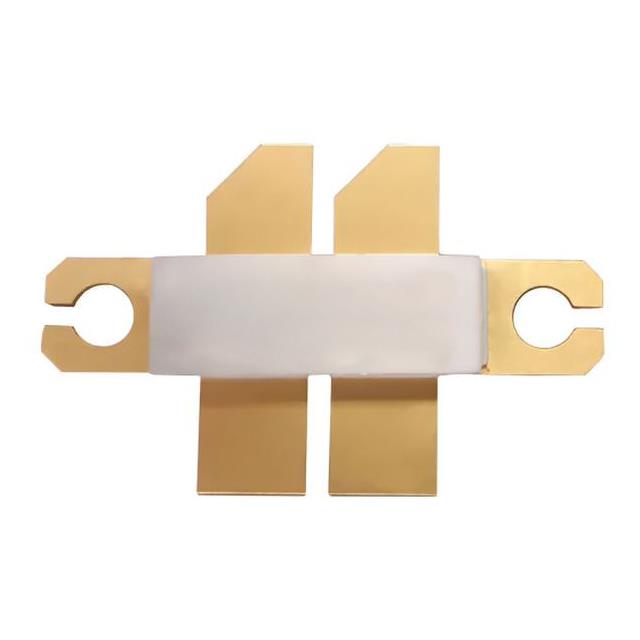
The RF3L05150CB4 is a 150 W, 28/32 V LDMOS FET designed for wide-band communication and ISM applications with frequencies from HF to 1 GHz. It can be used in class AB, B or C for all typical modulation formats. The device operates at 520 MHz with an output power of 150 W, gain of 23 dB, and efficiency of 60%. Absolute maximum ratings include a drain-source voltage of 90 V, gate-source voltage range of -8 to 10 V, and maximum junction temperature of 200 °C. Static characteristics feature a drain-source on-state resistance of 1 Ω and a threshold voltage of 2.5 V typ. Dynamic performance specifies a load mismatch VSWR of 20:1 at 150 W pulsed CW output power.
Verify the specific revision level of the datasheet DS13358 Rev 3 against the component marking to ensure alignment with current specifications. Confirm that the LBB package orientation and pin connections match the intended PCB layout requirements before finalizing procurement orders.
Select this component for designs requiring high linearity and efficiency across broad frequency ranges up to 1 GHz. Ensure thermal management solutions can handle the 0.4 °C/W junction-to-case thermal resistance to maintain the junction temperature below the 200 °C absolute maximum limit during continuous or pulsed operation.
This part belongs to STMicroelectronics' RF power LDMOS transistor family, specifically engineered for broadband communication systems. It utilizes advanced silicon technology to deliver robust performance in demanding RF environments while maintaining compliance with European environmental directives.
Direct substitutes are not explicitly listed in the official documentation. Evaluate other parts within the RF3L series based on matching power output, voltage ratings, and package dimensions if alternative sourcing is required.
The maximum operating voltage (VDD) is specified as 36 V.
Yes, the large positive and negative gate-source voltage range allows for improved Class C operation.
The ESD protection meets Class 2 according to the Human Body Model (ANSI/ESDA/JEDEC JS001-2017).
 RF3L05150CB4
The activity of extra discounts on wholesale prices is in full swing…
Please fill in your contact information and we will send you the latest wholesale price list.