 ChipApex | Global Electronic Components Supplier

SEARCH
Search Product
Search Post
— IC芯片 | 连接器 | 传感器 | 被动器件 —
Search productSearch post
— IC芯片 | 连接器 | 传感器 | 被动器件 —
Consult the customer manager about the wholesale price.
consultation hotline:86-132-6715-2157
email:[email protected]
Contact the product manager for consultation. One-stop consultation is available.
Do you want a lower wholesale price? Please send us your inquiry and we will reply immediately.
SN74AUC32244GKER is listed in the Buffers, Drivers, Receivers, Transceivers range at ChipApex. The manufacturer field lists Texas Instruments. Its product description is IC BUF NON-INVERT 2.7V 96LFBGA. Review the specifications below when checking this part for your BOM.
The SN74AUC32244GKER is a 32-bit buffer and line driver manufactured by Texas Instruments. It operates within a supply voltage range of 0.8 V to 3.6 V. The device features non-inverting logic with three-state outputs. It utilizes a Microstar BGA-96 package for surface-mount installation. Key electrical parameters include a maximum static current of 10 uA and an operating temperature range from -40°C to +85°C.
Verify the specific suffix GKER against the official datasheet to confirm package type and tape/reel specifications. Ensure compatibility with existing PCB footprints for the Microstar BGA-96 configuration. Confirm that the 0.8 V minimum supply voltage aligns with the target system's power rails before procurement.
Select this component when high-density 32-bit buffering is required in space-constrained designs. The AUC series offers lower power consumption compared to older ALVCH or LVC families. Verify that the 0.8 V low-voltage operation meets the requirements of the driving source and load interfaces.
This part belongs to the SN74AUC family of advanced ultra-low voltage CMOS logic devices. It serves as a high-performance alternative to previous generation buffers, offering improved speed and power efficiency. The 32-bit configuration allows for parallel data handling in compact packages suitable for modern mobile and computing platforms.
Check for SN74AUC32244GKE or other suffix variations if packaging differs. Consider SN74ALVCH32244 for higher voltage compatibility. Verify pinout and electrical characteristics against SN74LVC32244 for functional equivalence.
Explore related parts through Logic, Integrated Circuits (ICs), all product categories, ChipApex homepage.
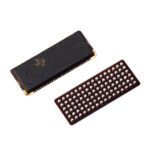 SN74AUC32244GKER
Learn what data acquisition means, from sensors and conditioning to sampling and storage. Review channel timing, wiring, calibration and data quality.
Read More
SN74AUC32244GKER is listed in the Buffers, Drivers, Receivers, Transceivers range at ChipApex. The manufacturer field lists Texas Instruments. Its product description is IC BUF…
Read More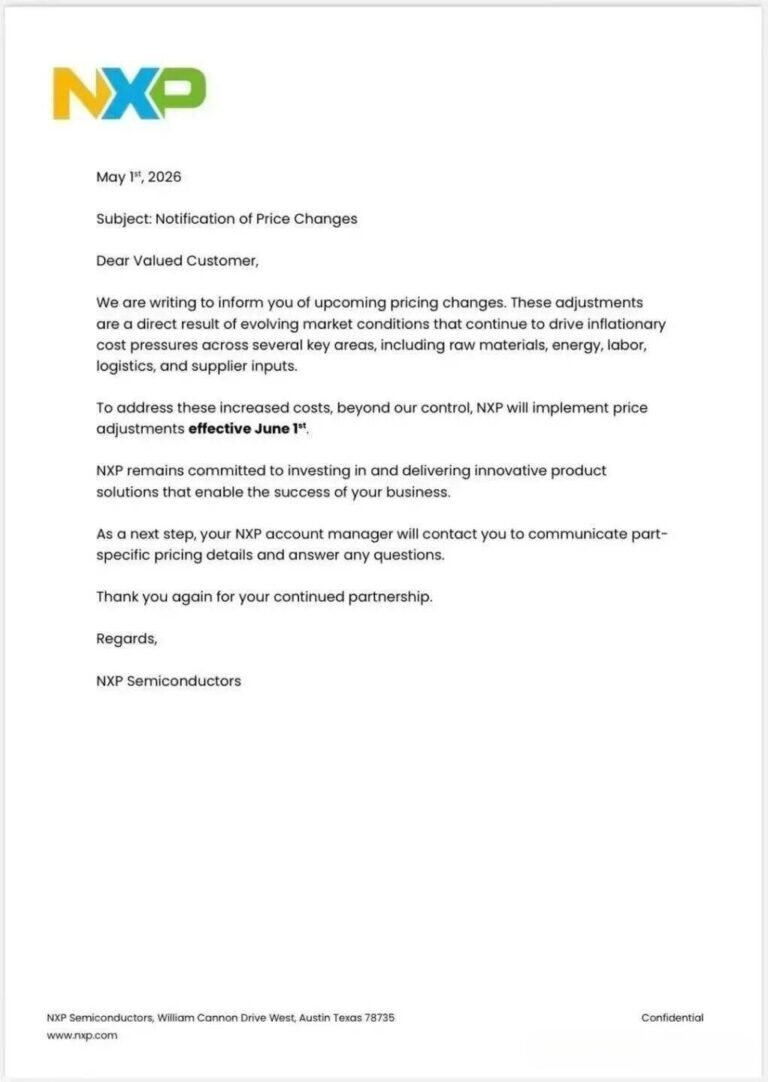
SN74AUC32244GKER is listed in the Buffers, Drivers, Receivers, Transceivers range at ChipApex. The manufacturer field lists Texas Instruments. Its product description is IC BUF…
Read More
SN74AUC32244GKER is listed in the Buffers, Drivers, Receivers, Transceivers range at ChipApex. The manufacturer field lists Texas Instruments. Its product description is IC BUF…
Read More
SN74AUC32244GKER is listed in the Buffers, Drivers, Receivers, Transceivers range at ChipApex. The manufacturer field lists Texas Instruments. Its product description is IC BUF…
Read More
SN74AUC32244GKER is listed in the Buffers, Drivers, Receivers, Transceivers range at ChipApex. The manufacturer field lists Texas Instruments. Its product description is IC BUF…
Read More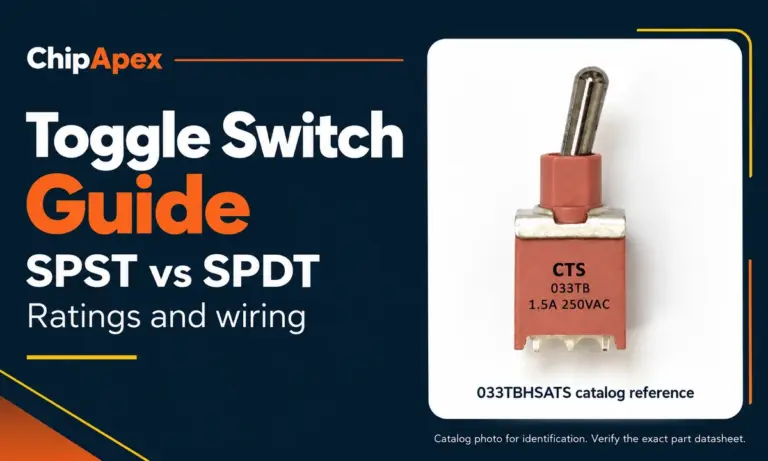
Compare SPST and SPDT toggle switches, understand AC/DC ratings, and follow wiring examples. Check contact action, mounting and parts in the ChipApex catalog.
Read More
SN74AUC32244GKER is listed in the Buffers, Drivers, Receivers, Transceivers range at ChipApex. The manufacturer field lists Texas Instruments. Its product description is IC BUF…
Read More
SN74AUC32244GKER is listed in the Buffers, Drivers, Receivers, Transceivers range at ChipApex. The manufacturer field lists Texas Instruments. Its product description is IC BUF…
Read More
Learn the relay definition, coil and contact operation, NO and NC forms, load ratings and suppression choices. Compare mechanical, reed and solid-state types.
Read More
Learn what a battery BMS does, how protection differs from charging, and which pack specifications to check when sourcing BMS components through ChipApex.
Read More
Learn how a TRIAC switches AC loads. Understand triggering, latching, holding current, phase control and thermal limits before choosing a component.
Read More
The activity of extra discounts on wholesale prices is in full swing…
Please fill in your contact information and we will send you the latest wholesale price list.





