ChipApex | Global Electronic Components Supplier
SEARCH
Search Product
Search Post
— IC芯片 | 连接器 | 传感器 | 被动器件 —
Search productSearch post
— IC芯片 | 连接器 | 传感器 | 被动器件 —
Consult the customer manager about the wholesale price.
consultation hotline:86-132-6715-2157
email:[email protected]
Contact the product manager for consultation. One-stop consultation is available.
Do you want a lower wholesale price? Please send us your inquiry and we will reply immediately.
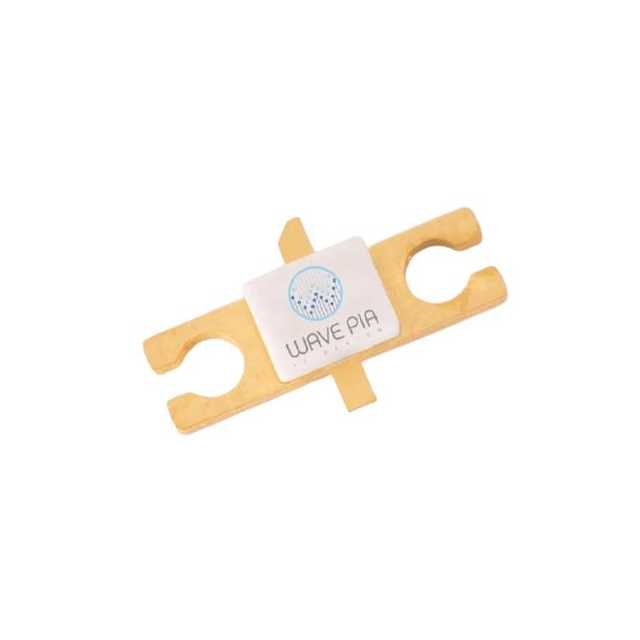
The WP2806015UH is an unmatched Gallium Nitride High Electron Mobility Transistor (GaN HEMT) designed for high-power RF applications. It operates up to 6 GHz with a drain-source breakdown voltage of 160 V and a typical operating voltage of 28 V. At 4.6 GHz, the device delivers a small signal gain of 12.7 dB, a saturated output power (PSAT) of 21.6 W, and a pulsed drain efficiency of 56.1% at PSAT. The component supports a maximum forward gate current of 30 mA and a maximum drain current of 1 A. It is available in surface mount (S) and through-hole (H) packages.
Verify the package suffix when ordering: 'S' denotes surface mount and 'H' denotes through hole. Confirm that the specific version matches the required mounting style for your PCB design. Ensure thermal management meets the 225°C junction temperature limit for reliable long-term operation.
Select this component for designs requiring high linearity and power density in the sub-6 GHz range. The unmatched configuration requires external matching networks. Evaluate the 10:1 VSWR tolerance if the load environment may present significant impedance mismatches during operation.
This part belongs to WAVEPIA's GaN HEMT portfolio, specifically engineered for solid-state RF module designers. The naming convention indicates a 28V drain voltage, DC to 6GHz frequency range, and approximately 15W output capability class. It serves as a core active element for high-efficiency power amplification.
No public substitute part numbers are documented in the official datasheet. Direct replacement requires verifying pinout compatibility, thermal resistance, and RF performance parameters against the original design requirements.
The WP2806015UH can withstand a 10:1 Output Mismatch Stress (VSWR) at all phase angles without damage when operated at 2W CW output.
The suffix indicates the mounting style: 'S' represents Surface Mount (Package Type 360BS), while 'H' represents Through Hole (Package Type 360BH).
At 4.5 GHz and PSAT, the typical pulsed drain efficiency is 60.7%. Under standard test conditions at 4.6 GHz, it is 56.1%.
 WP2806015UH
The activity of extra discounts on wholesale prices is in full swing…
Please fill in your contact information and we will send you the latest wholesale price list.