 ChipApex | Global Electronic Components Supplier

SEARCH
Search Product
Search Post
Search productSearch post
Products in the voltage reference family are used to derive an electrical potential having a stable, well-established value from a source of more uncertain character, for use as a standard of comparison in measurement, control, and similar applications. While their functional behavior may be similar to that of linear voltage regulators used for purposes of bulk power regulation, voltage reference devices are not adapted for use as such; their performance as standards of comparison has a generally inverse relationship with increasing output current capacity or actual current drawn by a load.
 LM4051CEM3-1.2/NOPBView Product
 LT1027ECS8-5#TRPBFView Product
 TSM6025AEUR+TView Product
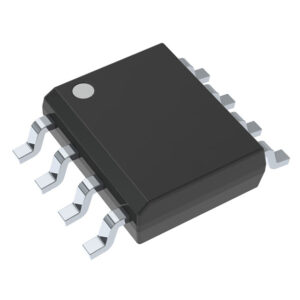 LM4140ACM-1.0View Product
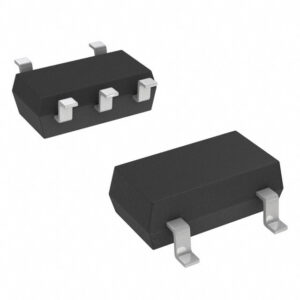 LM4040BECT-3.0View Product
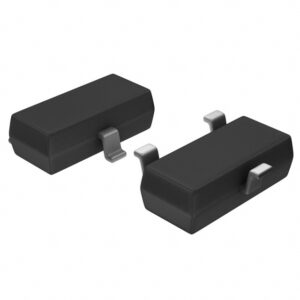 ADR5045ARTZ-REELView Product
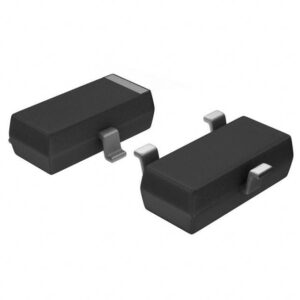 SPX432M-L/TRView Product
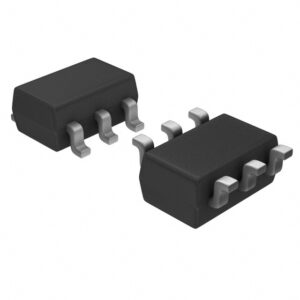 REF3240AIDBVRView Product
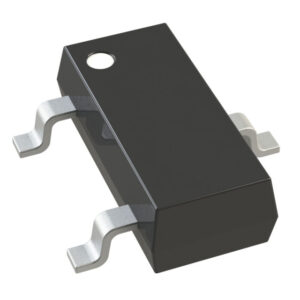 TL431CSFView Product
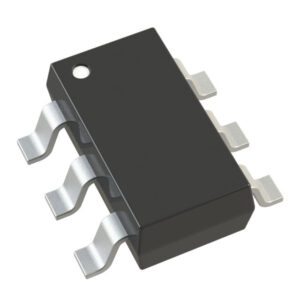 ADR3425ARJZ-R7View Product
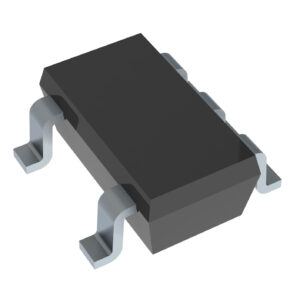 LM4120AIM5X-4.1/NOPBView Product
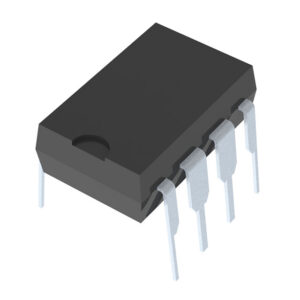 LT1019ACN8-10#PBFView Product
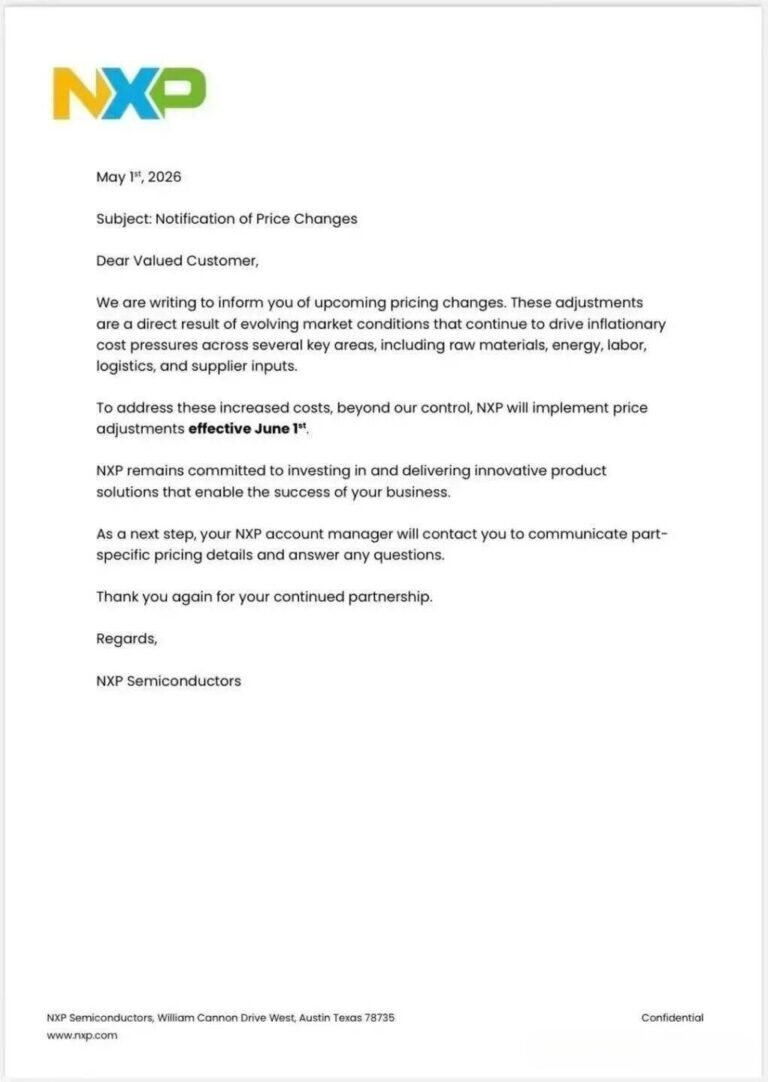
May 8, 2026 – Eindhoven, Netherlands NXP Semiconductors (NXPI), a global leader in automotive and industrial semiconductor solutions, has officially notified its worldwide channel…
Read More
WILMINGTON, Mass. – July 3, 2026 – Analog Devices, Inc. (ADI), the global leading supplier of high-performance analog, mixed-signal and signal processing semiconductors, has…
Read More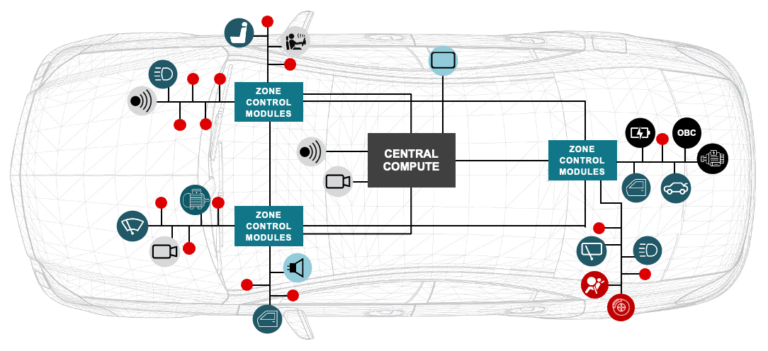
Las Vegas, January 6, 2026 — At the Consumer Electronics Show (CES) 2026, Texas Instruments (TI) (NASDAQ: TXN) announced a suite of next-generation semiconductor…
Read More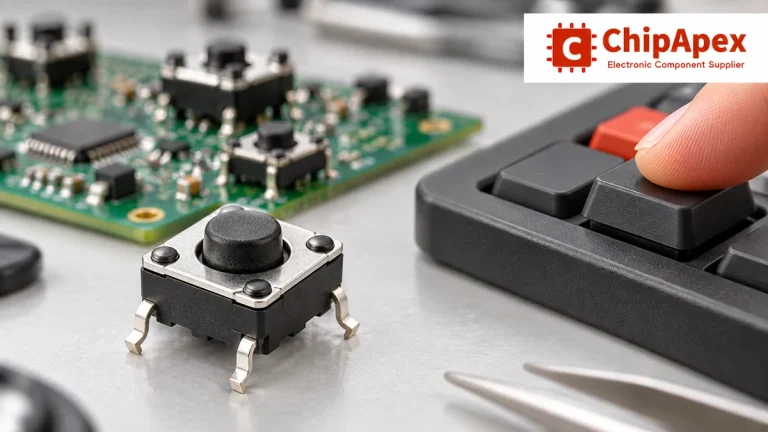
Understand tactile switches, PCB and keyboard differences, four-pin wiring, debounce, force, travel and replacement checks for reliable control inputs.
Read More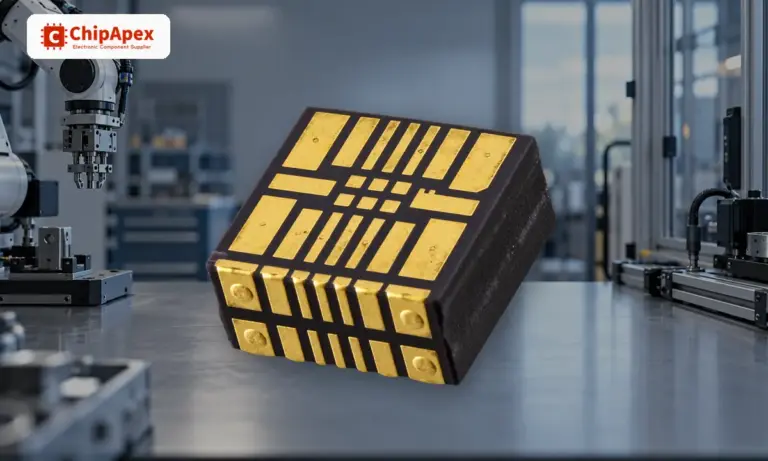
See how a MEMS gyroscope measures angular rate, why its angle estimate drifts, and which range, noise, interface and temperature specs to compare.
Read More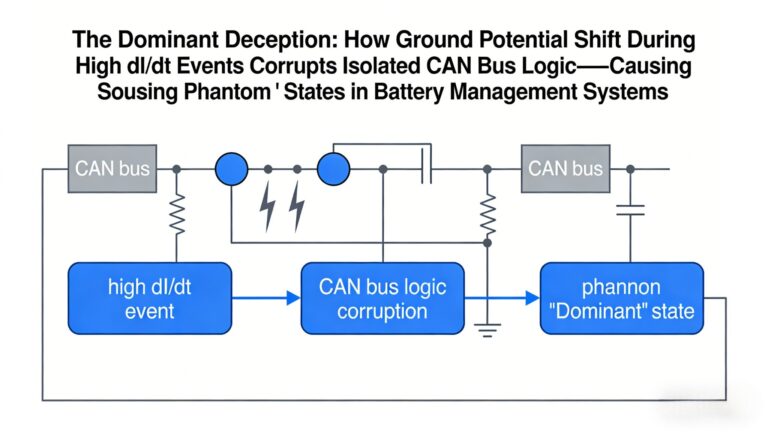
Stay ahead with ChipApex Insights — technical deep dives, market trends, and sourcing tips for memory, microcontrollers, power management, and industrial-grade components. Trusted by…
Read More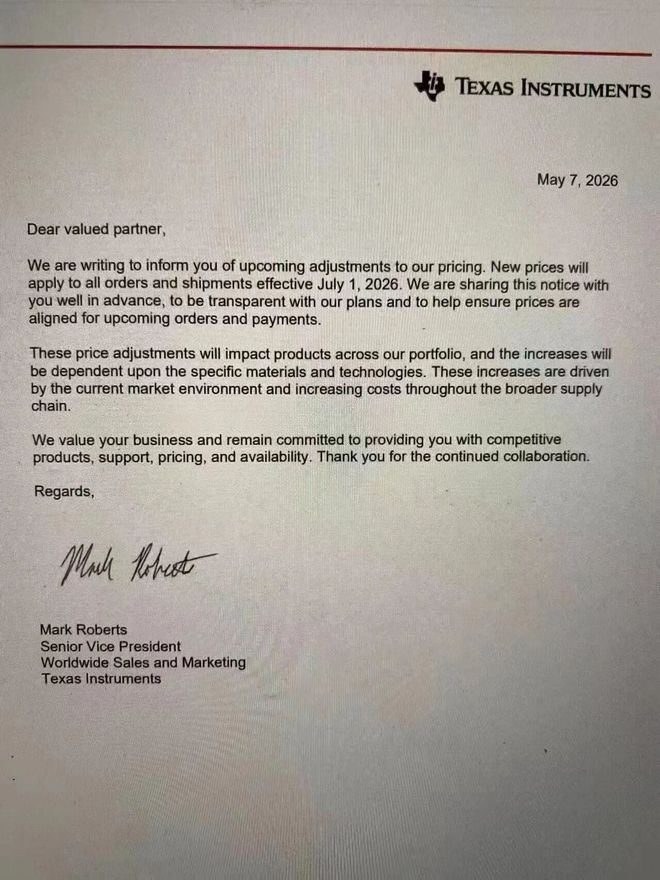
ChipApex – May 8, 2026 Texas Instruments (TI), the global leader in analog and embedded semiconductors, has officially notified customers of an upcoming company-wide…
Read More
Tempe, Arizona‑based semiconductor giant Microchip Technology has formally rolled out selective product price increases across its MCU, power‑management IC, memory controller and analog component…
Read More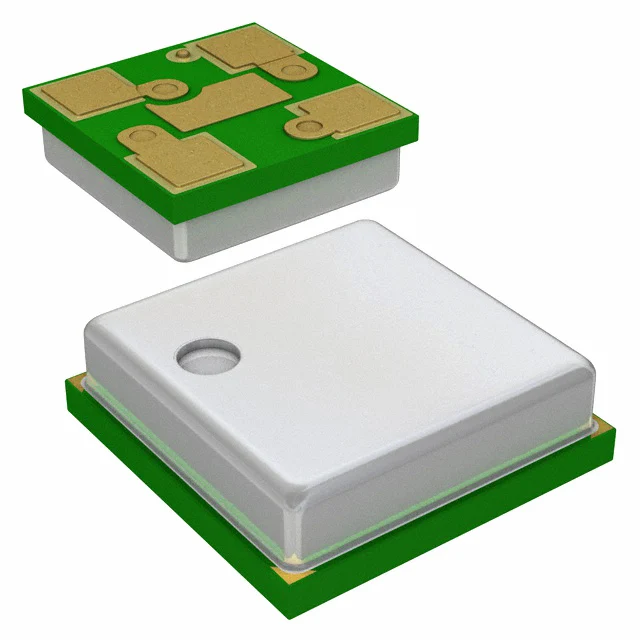
Interpret MAP sensor readings using local atmospheric pressure, convert a ratiometric signal to kPa and distinguish a pressure change from a signal fault.
Read More
In the world of embedded electronics, getting a device to "think" is only half the battle. The other half is getting it to communicate…
Read More
Over the past week, the global electronic components sector has witnessed dual transformations in policy and technology: Coupled with mounting pressure from a worsening…
Read More
Understand load cell sensor output, bridge wiring and calibration. Learn how mV/V sensitivity, mechanics and ADC noise affect measurement accuracy.
Read More
The activity of extra discounts on wholesale prices is in full swing…
Please fill in your contact information and we will send you the latest wholesale price list.

