 ChipApex | Global Electronic Components Supplier

SEARCH
Search Product
Search Post
— IC芯片 | 连接器 | 传感器 | 被动器件 —
Search productSearch post
— IC芯片 | 连接器 | 传感器 | 被动器件 —
Consult the customer manager about the wholesale price.
consultation hotline:86-132-6715-2157
email:[email protected]
Contact the product manager for consultation. One-stop consultation is available.
Do you want a lower wholesale price? Please send us your inquiry and we will reply immediately.
74ALVCH162245DGG,1 is listed in the Buffers, Drivers, Receivers, Transceivers range at ChipApex. The manufacturer field lists Nexperia USA Inc.. Its product description is IC TXRX NON-INVERT 3.6V 48TSSOP. Review the specifications below when checking this part for your BOM.
The Nexperia 74ALVCH162245DGG,1 is a 16-bit bus transceiver with direction pin and 30 Ohm termination resistor; 3-state. It operates within a supply voltage range of 1.2 V to 3.6 V. Propagation delay ranges from 1.0 ns to 4.9 ns depending on voltage. Input leakage current is typically 0.1 μA. Supply current is typically 0.2 μA. Package is TSSOP48 (SOT362-1).
Verify the specific ordering suffix DGG,1 against the manufacturer's latest documentation to confirm package type and tape-and-reel specifications. Confirm that the -40 °C to +85 °C temperature range aligns with your operational requirements before finalizing procurement.
Select this component when designing systems requiring integrated series termination to reduce external components. The MULTIBYTE flow-through architecture simplifies PCB layout for high-density designs. Ensure input transition rates comply with recommended operating conditions to maintain specified timing performance.
This device belongs to the ALVCH logic family, designed for low-voltage CMOS applications. It provides bidirectional data transfer capabilities with independent direction control for two 8-bit sections or one 16-bit section.
Check Nexperia datasheets for 74LVC162245 or 74LVCH162245 variants if different speed grades or voltage tolerances are required. Verify pin compatibility and electrical characteristics match before substitution.
The IOFF circuitry disables the outputs when the device is powered down, preventing potentially damaging backflow current through the device.
The integrated 30 Ω termination resistors are designed to improve signal integrity by reducing reflections on high-speed transmission lines.
Explore related parts through Logic, Integrated Circuits (ICs), all product categories, ChipApex homepage.
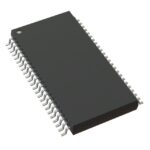 74ALVCH162245DGG,1

74ALVCH162245DGG,1 is listed in the Buffers, Drivers, Receivers, Transceivers range at ChipApex. The manufacturer field lists Nexperia USA Inc.. Its product description is IC…
Read More
Learn what a battery BMS does, how protection differs from charging, and which pack specifications to check when sourcing BMS components through ChipApex.
Read More
Understand tactile switches, PCB and keyboard differences, four-pin wiring, debounce, force, travel and replacement checks for reliable control inputs.
Read More
74ALVCH162245DGG,1 is listed in the Buffers, Drivers, Receivers, Transceivers range at ChipApex. The manufacturer field lists Nexperia USA Inc.. Its product description is IC…
Read More
74ALVCH162245DGG,1 is listed in the Buffers, Drivers, Receivers, Transceivers range at ChipApex. The manufacturer field lists Nexperia USA Inc.. Its product description is IC…
Read More
74ALVCH162245DGG,1 is listed in the Buffers, Drivers, Receivers, Transceivers range at ChipApex. The manufacturer field lists Nexperia USA Inc.. Its product description is IC…
Read More
74ALVCH162245DGG,1 is listed in the Buffers, Drivers, Receivers, Transceivers range at ChipApex. The manufacturer field lists Nexperia USA Inc.. Its product description is IC…
Read More
74ALVCH162245DGG,1 is listed in the Buffers, Drivers, Receivers, Transceivers range at ChipApex. The manufacturer field lists Nexperia USA Inc.. Its product description is IC…
Read More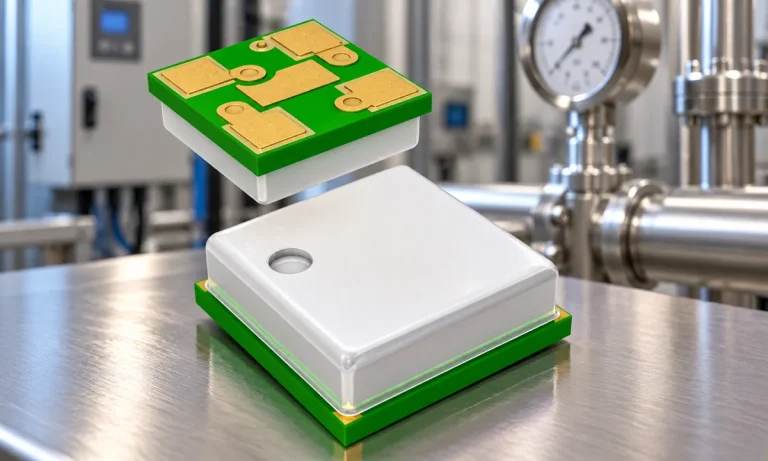
Learn how a pressure transducer converts pressure into voltage, current, or digital output, and compare pressure references and key selection specs.
Read More
74ALVCH162245DGG,1 is listed in the Buffers, Drivers, Receivers, Transceivers range at ChipApex. The manufacturer field lists Nexperia USA Inc.. Its product description is IC…
Read More
74ALVCH162245DGG,1 is listed in the Buffers, Drivers, Receivers, Transceivers range at ChipApex. The manufacturer field lists Nexperia USA Inc.. Its product description is IC…
Read More
See when an inductor behaves linearly, how DC bias and saturation reduce inductance, and which current and temperature curves to check.
Read More
The activity of extra discounts on wholesale prices is in full swing…
Please fill in your contact information and we will send you the latest wholesale price list.





