 ChipApex | Global Electronic Components Supplier
ADN2891ACPZ-RL7
Search Product
Search Post
— IC芯片 | 连接器 | 传感器 | 被动器件 —
Search productSearch post
— IC芯片 | 连接器 | 传感器 | 被动器件 —
Consult the customer manager about the wholesale price.
consultation hotline:86-132-6715-2157
email:[email protected]
Contact the product manager for consultation. One-stop consultation is available.
Do you want a lower wholesale price? Please send us your inquiry and we will reply immediately.
The ADN2891ACPZ-RL7 is a 3.2 Gbps limiting amplifier manufactured by Analog Devices Inc., designed for SONET, Gigabit Ethernet, and Fibre Channel optoelectronic conversion applications. It features integrated loss-of-signal detection and a received signal strength indicator compliant with SFF-8472 standards. The device operates on a single 3.3 V supply with low power dissipation of 145 mW. It provides differential CML outputs with controlled rise and fall times of 80 ps typical. The component is housed in a compact 3 mm × 3 mm, 16-lead LFCSP package suitable for space-constrained designs.
Verify the specific ordering suffix to confirm reel quantity and packaging configuration. Ensure compatibility with the required temperature range and RoHS compliance status before integration into production designs. Cross-reference the latest datasheet revision for any updates to pin configurations or electrical specifications.
Select this component for high-speed optical receiver front-ends requiring integrated signal monitoring capabilities. The built-in RSSI functionality simplifies design complexity by removing the need for separate photodiode bias monitoring circuits. Consider the thermal resistance characteristics when designing PCB layouts to ensure adequate heat dissipation from the exposed pad.
This part belongs to the ADN289x series of limiting amplifiers from Analog Devices. It shares functional similarities with other members like the ADN2892 but is optimized specifically for 3.2 Gbps data rates. The series targets dense optical interconnect markets where size and power efficiency are critical constraints for modern transceiver modules.
Direct replacements within the same family include ADN2891ACPZ-500RL7 and ADN2891ACPZ-RL, which share identical electrical specifications and pinouts. Verify that any substitute maintains the same 16-lead LFCSP footprint and thermal performance characteristics.
The LOS threshold is set by connecting a resistor between the THRADJ pin and VEE, allowing programmable levels typically ranging from 3.5 mV p-p to 35 mV p-p.
These pins allow for input offset correction by connecting an external capacitor between them, which helps compensate for dc offsets in the signal path, particularly beneficial for SONET applications.
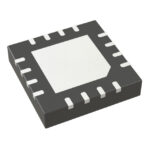 ADN2891ACPZ-RL7
The activity of extra discounts on wholesale prices is in full swing…
Please fill in your contact information and we will send you the latest wholesale price list.